

Income and tax management: 2026 smart strategies
Sponsored content. This article was supplied by a third party and Business Money has been paid to publish it.
Managing and maximizing your income streams
The foundations of income and tax management
Effective income and tax management is more than just an annual chore; it’s a cornerstone of robust financial health and a powerful driver of wealth accumulation. By understanding and strategically navigating the tax landscape, individuals and businesses can significantly enhance their financial outcomes. This involves a comprehensive approach, moving beyond mere compliance to proactive planning that aligns with long-term financial goals. For a deeper dive into establishing such a framework, explore the Strategic Tax Planning Framework: A Year-Round Approach to Reducing Taxes.
Proactive income and tax management: Planning vs. preparation
Many people think about taxes only when the filing deadline looms, engaging in reactive tax preparation. However, true income and tax management is proactive, a year-round strategy designed to minimize tax liabilities and maximize financial opportunities. Tax preparation is about accurately reporting what has already happened; tax planning is about influencing what will happen.
This distinction is crucial. Reactive preparation often leads to missed opportunities, unnecessary stress, and potentially higher tax burdens. Proactive planning, conversely, allows us to make informed decisions throughout the year, taking advantage of deductions, credits, and timing strategies as they arise. It means staying informed about current regulations from the Internal Revenue Service and anticipating future changes. This foresight can prevent common pitfalls that lead to penalties or audits. For instance, understanding how to proactively manage your tax obligations can significantly reduce the chances of encountering issues that might require an IRS Penalty Abatement Complete Guide.
How business structure dictates tax filing obligations
The legal structure of a business profoundly influences its tax obligations and the types of returns it must file. Understanding these differences is fundamental for any business owner.
- Sole proprietorships: These are the simplest structures, where the business and owner are considered the same entity for tax purposes. Income and expenses are reported on Schedule C (Form 1040) of the owner’s personal tax return. The owner also pays self-employment taxes (Social Security and Medicare) on net earnings.
- Partnerships: Comprising two or more owners, partnerships do not pay income tax themselves. Instead, they file an information return (Form 1065) that reports the partnership’s income, deductions, gains, and losses. Each partner then receives a Schedule K-1 detailing their share of the partnership’s income or loss, which they report on their personal tax return. Partners are also subject to self-employment tax.
- S-Corporations (S-Corps): These entities elect to pass corporate income, losses, deductions, and credits through to their shareholders for federal tax purposes. Like partnerships, S-corps avoid double taxation (corporate and individual) and file an information return (Form 1120-S). Shareholders receive Schedule K-1s and report their share of income on their personal returns. A key advantage for owners who work for the business is the ability to pay themselves a “reasonable salary” subject to payroll taxes, while additional profits can be distributed tax-free from self-employment taxes.
- C-Corporations (C-Corps): C-corps are separate legal entities from their owners and are subject to corporate income tax on their profits (Form 1120). When profits are then distributed to shareholders as dividends, those dividends are taxed again at the individual level, leading to “double taxation.” This structure might be chosen for specific growth plans, access to capital, or liability protection.
Choosing the right business structure is a critical tax planning decision. It impacts not only the forms filed but also potential deductions, tax rates, and liability. For businesses facing scrutiny, understanding the nuances of how income is reported and deductions are claimed can be vital during SCL business income tax audits. Even seemingly small deductions, like the home office deduction, require careful adherence to IRS rules based on your business structure.
Strategic investment and portfolio tax optimization

Beyond managing your immediate income and business taxes, a significant opportunity for wealth creation lies in optimizing your investment portfolio for tax efficiency. Taxes can reduce investment returns by as much as 2% per year on average, highlighting the importance of strategic asset allocation and tax-smart investing. The goal is to minimize “portfolio drag” caused by taxes, allowing more of your investment gains to compound over time.
Maximizing after-tax returns with tax-loss harvesting and direct indexing
Two powerful strategies for enhancing after-tax returns are tax-loss harvesting and direct indexing.
Tax-loss harvesting: This involves selling investments at a loss to offset capital gains and, potentially, a limited amount of ordinary income. Up to $3,000 of net capital losses can offset ordinary income annually, with any excess losses carried forward indefinitely to future years. This strategy is most effective when done proactively throughout the year, not just at year-end. To avoid the “wash-sale rule,” which disallows a loss if you repurchase a “substantially identical” security within 30 days before or after the sale, careful planning is necessary. Tax-loss harvesting allows investors to convert unrealized losses into tangible tax benefits, effectively reducing their current and future tax burdens.
Direct indexing: This advanced strategy involves owning the individual stocks that make up an index (like the S&P 500) directly, rather than investing in a mutual fund or ETF that tracks the index. This direct ownership provides significantly more flexibility for tax management. With direct indexing, each individual security’s tax characteristics can be managed to the investor’s specific situation. This allows for continuous, systematic tax-loss harvesting on individual holdings, without being constrained by the collective gains or losses of a fund. It also enables more granular control over tax lot selection and in-kind transfers, potentially adding 1%–2% in after-tax excess returns annually, according to third-party research. For those looking to implement sophisticated tax strategies, understanding the techniques employed by the ultra-wealthy can be highly beneficial, as detailed in The Ultra-Wealthy Tax Playbook (And How to Use It Yourself).
Asset location and managing capital gains
Asset location: This strategy involves placing different types of investments in the most tax-efficient account types. Highly taxed assets (like bonds, REITs, or actively managed funds with high turnover) are typically placed in tax-deferred accounts (e.g., 401(k)s, IRAs) or tax-exempt accounts (e.g., Roth IRAs). Less taxed assets (like growth stocks or index funds with low turnover, which generate long-term capital gains) are often held in taxable brokerage accounts. This minimizes the tax drag on your portfolio.
Managing capital gains: Capital gains arise when an investment is sold for more than its purchase price. Short-term capital gains (assets held for one year or less) are taxed at ordinary income rates, which can be as high as 40.8% (including the 3.8% Net Investment Income Tax for high earners). Long-term capital gains (assets held for more than one year) are taxed at preferential rates of 0%, 15%, or 20%, plus the 3.8% Net Investment Income Tax for high-income taxpayers. Strategies to manage capital gains include:
- Holding periods: Aim to hold investments for more than a year to qualify for lower long-term capital gains rates.
- Tax lot selection: When selling a portion of a position, choose specific tax lots (e.g., those with the highest cost basis) to minimize gains or realize losses.
- Charitable donations of appreciated stock: Donating appreciated securities held for more than a year to charity can allow you to deduct the fair market value and avoid paying capital gains tax on the appreciation.
- Net Investment Income Tax (NIIT): High-income earners (Modified Adjusted Gross Income over $200,000 for single filers, $250,000 for married filing jointly) are subject to a 3.8% NIIT on certain investment income. Planning strategies often involve managing MAGI or structuring investments to minimize exposure. For individuals with various income streams, including those from investments, Passive income management becomes crucial to navigate these tax implications.
Here’s a simplified comparison of how different asset classes might be optimally located:
Asset Class Taxable Account Tax-Deferred Account (401(k), Traditional IRA) Tax-Exempt Account (Roth IRA, HSA) High-Turnover Funds Least Efficient Most Efficient Most Efficient Bonds Least Efficient Most Efficient Most Efficient REITs Least Efficient Most Efficient Most Efficient Growth Stocks Most Efficient Efficient Efficient Index Funds Most Efficient Efficient Efficient Qualified Dividends Efficient Efficient Most Efficient 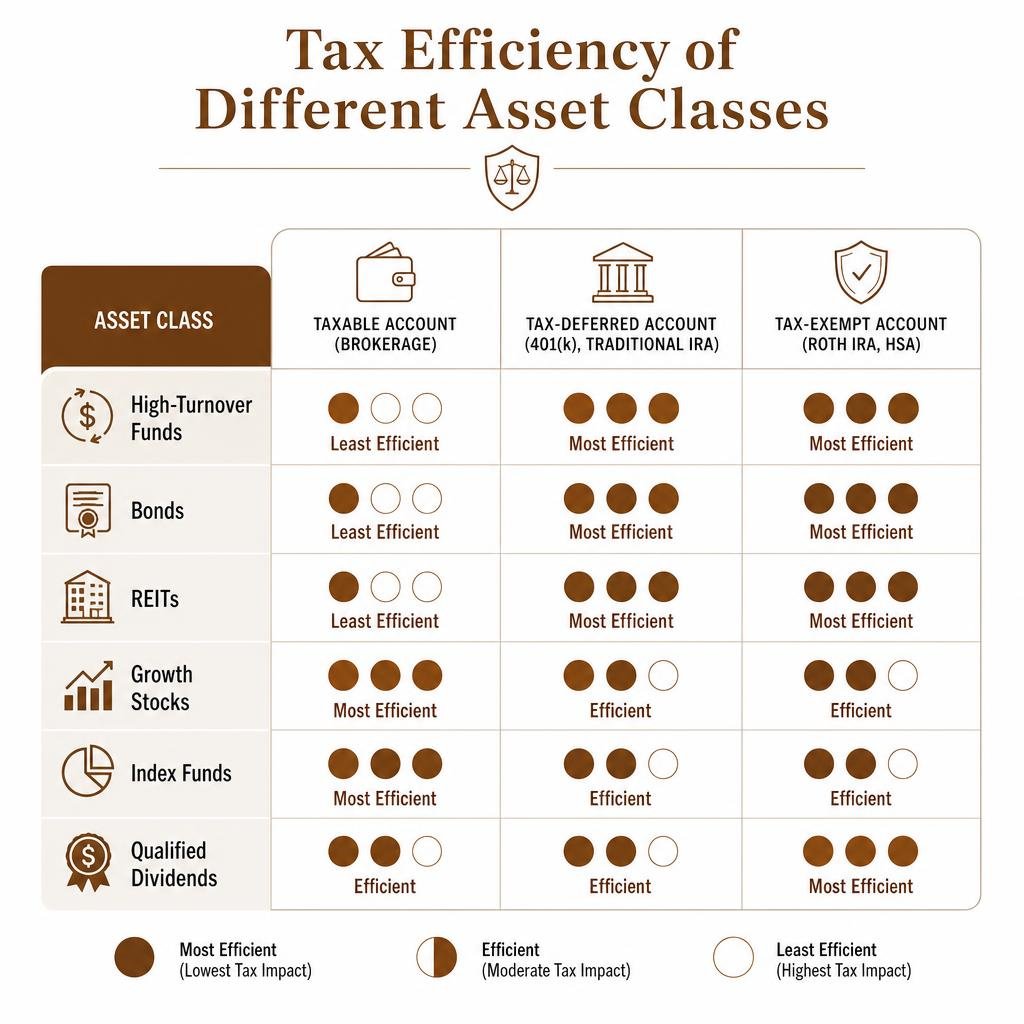
Advanced wealth preservation and entity structuring

For high-net-worth individuals and business owners, income and tax management extends to sophisticated strategies focused on wealth preservation, intergenerational transfer, and strategic entity structuring. This level of planning often involves anticipating significant legislative changes and leveraging complex tax codes to mitigate liabilities. Proactive engagement with these strategies is key to securing a lasting financial legacy. For a comprehensive overview of how to approach these complex tax matters, particularly in a year like 2026, consider consulting resources like How To Approach Taxes in 2026 | CB Investment Management.
Navigating the 2026 Tax Landscape and the OBBBA
The year 2026 marks a pivotal moment in tax planning, largely due to the scheduled expiration of many provisions from the Tax Cuts and Jobs Act (TCJA) of 2017. While the “One Big Beautiful Bill Act” (OBBBA), signed into law on July 4, 2025, permanently extended most TCJA provisions, it also introduced new temporary measures and adjustments that require careful attention.
Key changes to be aware of for 2026 and beyond include:
- Standard deduction: While the TCJA significantly increased the standard deduction, the OBBBA has further adjusted these amounts. For 2026, the standard deduction is projected to be around $16,100 for single filers and $32,200 for married couples filing jointly. This continues to make itemizing deductions less common for many taxpayers.
- Tax brackets: The OBBBA permanently extended the individual income tax rates, with the top marginal rate remaining at 37%. However, the income thresholds for each bracket are subject to annual inflation adjustments.
- SALT deduction limit: The State and Local Tax (SALT) deduction cap, previously set at $10,000, was a significant concern for residents in high-tax states. The OBBBA raised this cap to $40,000 for tax years 2025 through 2029. However, this increased cap phases down for taxpayers with modified Adjusted Gross Income (AGI) above $500,000, with a floor of $10,000. This temporary increase provides a planning window for many.
- Estate and gift tax exemption: The OBBBA permanently set the lifetime gift, estate, and generation-skipping transfer tax exemptions at $15 million per individual (or $30 million for a married couple), with annual inflation adjustments. This is a crucial consideration for high-net-worth individuals planning their estates.
- Charitable contributions: For itemizers, charitable contributions are now deductible only above 0.5% of AGI, and a permanent deduction of up to $1,000 ($2,000 for married filing jointly) for non-itemizers was introduced.
These legislative shifts necessitate a thorough review of existing tax strategies. What worked before might not be optimal now. Staying informed through resources like the KPMG Personal Tax Planning Guide is essential for adapting to these changes and planning effectively for the coming years.
Advanced income and tax management for high-income earners
High-income earners face unique tax challenges, including higher marginal rates, the Net Investment Income Tax, and phase-outs for various deductions and credits. Effective planning often involves layering multiple strategies:
- Retirement accounts beyond the basics:
- Backdoor Roth IRA: For those whose income exceeds the direct Roth IRA contribution limits, a backdoor Roth involves contributing to a traditional IRA (non-deductible) and then converting it to a Roth IRA. While the conversion itself is taxable if there are pre-tax IRA funds, it allows high earners to access the tax-free growth and withdrawals of a Roth.
- Defined benefit plans: Self-employed professionals and small business owners can establish defined benefit plans, which allow for significantly larger tax-deductible contributions than 401(k)s, sometimes exceeding $200,000 annually depending on age and income. This can be a powerful tool for rapid tax deferral and retirement savings.
- SEP-IRAs: For self-employed individuals or small business owners, a Simplified Employee Pension (SEP) IRA allows for contributions up to 25% of net self-employment earnings, capped at $70,000 for 2025.
- Charitable Giving Strategies:
- Donor-advised funds (DAFs): DAFs allow individuals to make a charitable contribution, receive an immediate tax deduction, and then recommend grants to charities over time. This is particularly useful for “bunching” deductions, where multiple years of charitable giving are front-loaded into a single high-income year to exceed the standard deduction.
- Qualified charitable distributions (QCDs): For those age 70½ or older, QCDs allow direct transfers from an IRA to a qualified charity, satisfying RMDs without the distribution being included in taxable income.
- Donating appreciated stock: Instead of cash, donating appreciated stock held for more than a year allows the donor to avoid capital gains tax on the appreciation and deduct the fair market value of the stock.
- Pass-through entity tax (PTET): With the SALT cap, many states have introduced PTETs, which allow pass-through entities (partnerships, S-corps) to elect to pay state income tax at the entity level. This entity-level payment is generally deductible against federal income, effectively bypassing the federal SALT cap for the owners. This strategy remains highly relevant, especially with the temporary increase in the federal SALT cap to $40,000, as it can still provide benefits for those whose state and local taxes exceed this amount.
- Income timing and deferral: Strategically timing income and deductions can significantly impact tax liability. This might involve deferring bonuses into the next tax year or accelerating deductions into the current year, depending on projected income and tax rates. Roth conversions, for example, can be strategically timed during years of lower income to take advantage of lower tax brackets.
Navigating these complex strategies requires deep expertise. For those facing significant tax challenges or seeking advanced solutions, understanding potential IRS Tax Problems and how to proactively address them is paramount.
Frequently asked questions
Understanding income and tax management involves more than just knowing the rules; it’s about applying them strategically to achieve optimal tax compliance and efficiency. Here, we address some common questions to help clarify key concepts and provide actionable insights for benchmarking your financial health.
What is the difference between business taxes and personal income taxes?
The fundamental difference lies in their scope and application. Personal income taxes (e.g., federal income tax, state income tax) are levied on an individual’s total income from all sources, including wages, salaries, investments, and passive income. They are typically filed using Form 1040. Business taxes, on the other hand, are specific to income generated by a business entity. While some business income (like that from sole proprietorships or partnerships, known as “pass-through income”) flows through to the owner’s personal tax return, other business structures, like C-corporations, pay taxes at the corporate level before any profits are distributed to owners. Additionally, businesses might be subject to other taxes not typically faced by individuals, such as self-employment tax (which covers Social Security and Medicare for self-employed individuals), employment taxes (for employees), and excise taxes on certain goods or services. The form of business organization dictates which specific business taxes apply and how they are reported.
How can taxpayers measure and benchmark their tax efficiency over time?
Measuring tax efficiency helps you understand how much of your income you’re actually keeping after taxes. Key metrics include:
- Effective tax rate: This is your total tax liability divided by your total taxable income. A lower effective tax rate generally indicates higher tax efficiency. Tracking this year-over-year allows you to see the impact of your planning strategies.
- Marginal tax rate: This is the tax rate applied to your last dollar of income. Knowing your marginal rate is crucial for making decisions about additional income or deductions, as it tells you the immediate tax impact.
- Tax-advantaged utilization: Benchmarking how much of your eligible contributions you make to tax-advantaged accounts (401(k), IRA, HSA, DAFs) against the maximum allowable limits can reveal missed opportunities.
- Refund size: While a large refund might feel good, it often means you overpaid taxes throughout the year, essentially giving the government an interest-free loan. Aiming for a refund close to zero indicates accurate withholding and better cash flow management.
By regularly tracking these metrics and comparing them against your past performance or industry benchmarks, you can identify areas for improvement and refine your tax planning strategies.
What are the four pillars of tax planning?
The “four pillars” provide a comprehensive framework for proactive tax planning, applicable to almost any taxpayer:
- Income timing: This involves strategically accelerating or deferring income and deductions across tax years to take advantage of current or future tax rates. Examples include timing bonuses, capital gains realizations, or postponing invoicing.
- Deduction optimization: This focuses on maximizing allowable deductions and credits. It includes deciding between the standard deduction and itemizing, bunching charitable contributions, optimizing business expenses, and leveraging tax credits like the Child Tax Credit or education credits.
- Account selection: This pillar emphasizes placing investments in the most tax-efficient account types (taxable, tax-deferred, or tax-exempt) based on their tax characteristics and your financial goals. This is also known as asset location.
- Credit capture: Credits directly reduce your tax liability dollar-for-dollar, making them more valuable than deductions. This pillar ensures you identify and claim all eligible credits, such as the Earned Income Tax Credit, child and dependent care credits, or various energy credits.
By consistently applying these four pillars throughout the year, taxpayers can significantly lower their effective tax rate and keep more of their hard-earned money.
Conclusion

Income and tax management is far more than a compliance exercise; it is a dynamic and powerful tool for building and preserving wealth. By embracing a proactive, year-round approach, understanding the nuances of business taxation, and leveraging sophisticated investment and wealth preservation strategies, you can transform your tax obligations into strategic advantages.
The tax landscape, especially with the 2026 changes introduced by the OBBBA, demands ongoing vigilance and adaptability. From maximizing after-tax returns through tax-loss harvesting and direct indexing to employing advanced strategies like defined benefit plans and donor-advised funds, the opportunities to optimize your financial position are numerous. By focusing on the four pillars of tax planning—income timing, deduction optimization, account selection, and credit capture—you gain control over your financial destiny.
Effective income and tax management empowers you to retain more of your earnings, grow your investments more efficiently, and secure a robust financial future for yourself and your legacy. It’s about making smart, informed decisions today that will yield significant benefits for years to come.