

Master real estate investment and management
Sponsored content. This article was supplied by a third party and Business Money has been paid to publish it.
Maximizing returns through real estate investment and management
Core pillars of real estate investment and management
Successful real estate endeavors are built upon a foundation of robust investment strategies coupled with meticulous operational execution. This dual focus drives portfolio growth, enhances operational efficiency, leverages local execution, and ultimately maximizes value creation for investors. It’s a dynamic interplay where capital allocation decisions set the strategic direction, and hands-on management ensures assets perform to their highest potential.

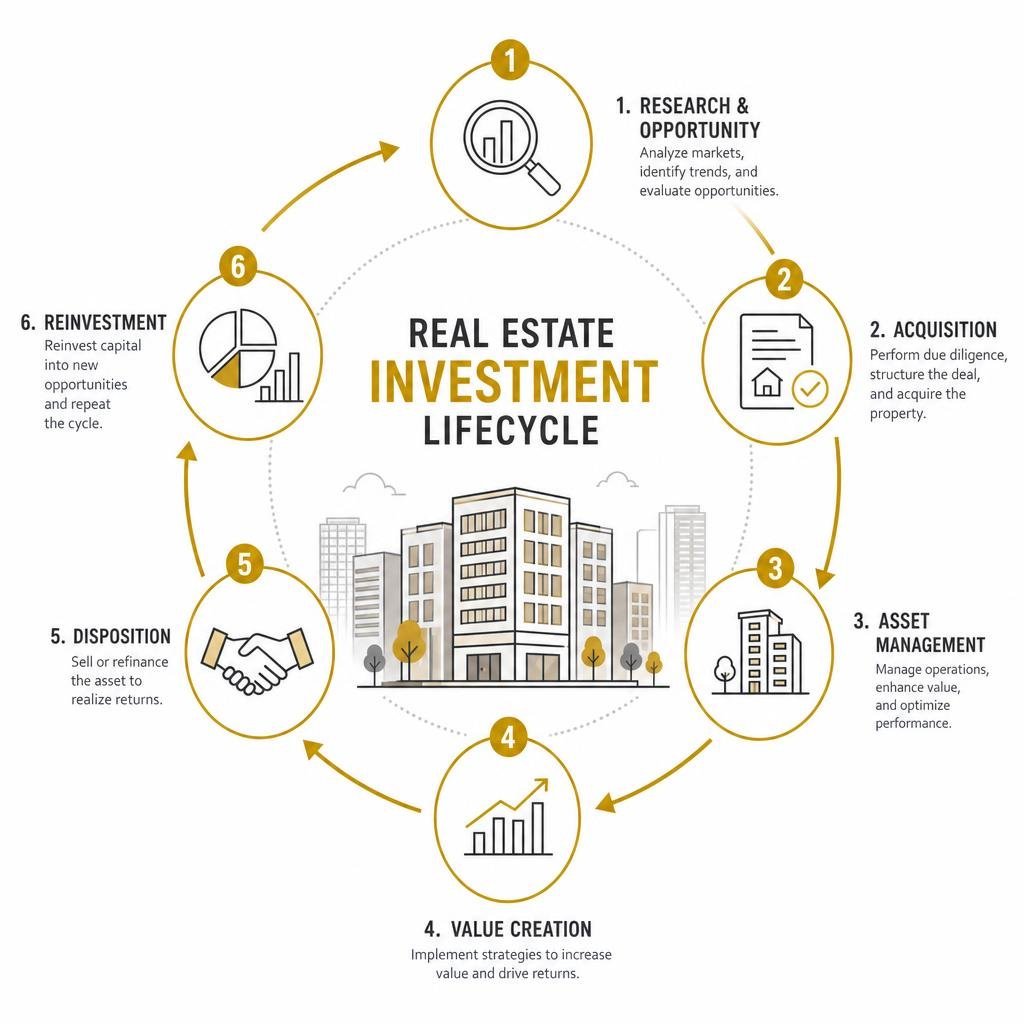
The journey of a real estate investment, from initial acquisition to eventual disposition, is a complex one. It involves understanding market cycles, anticipating future trends, and proactively managing every aspect of a property. This holistic approach is what distinguishes successful real estate investment and management firms.
Differentiating capital Allocation from asset operations
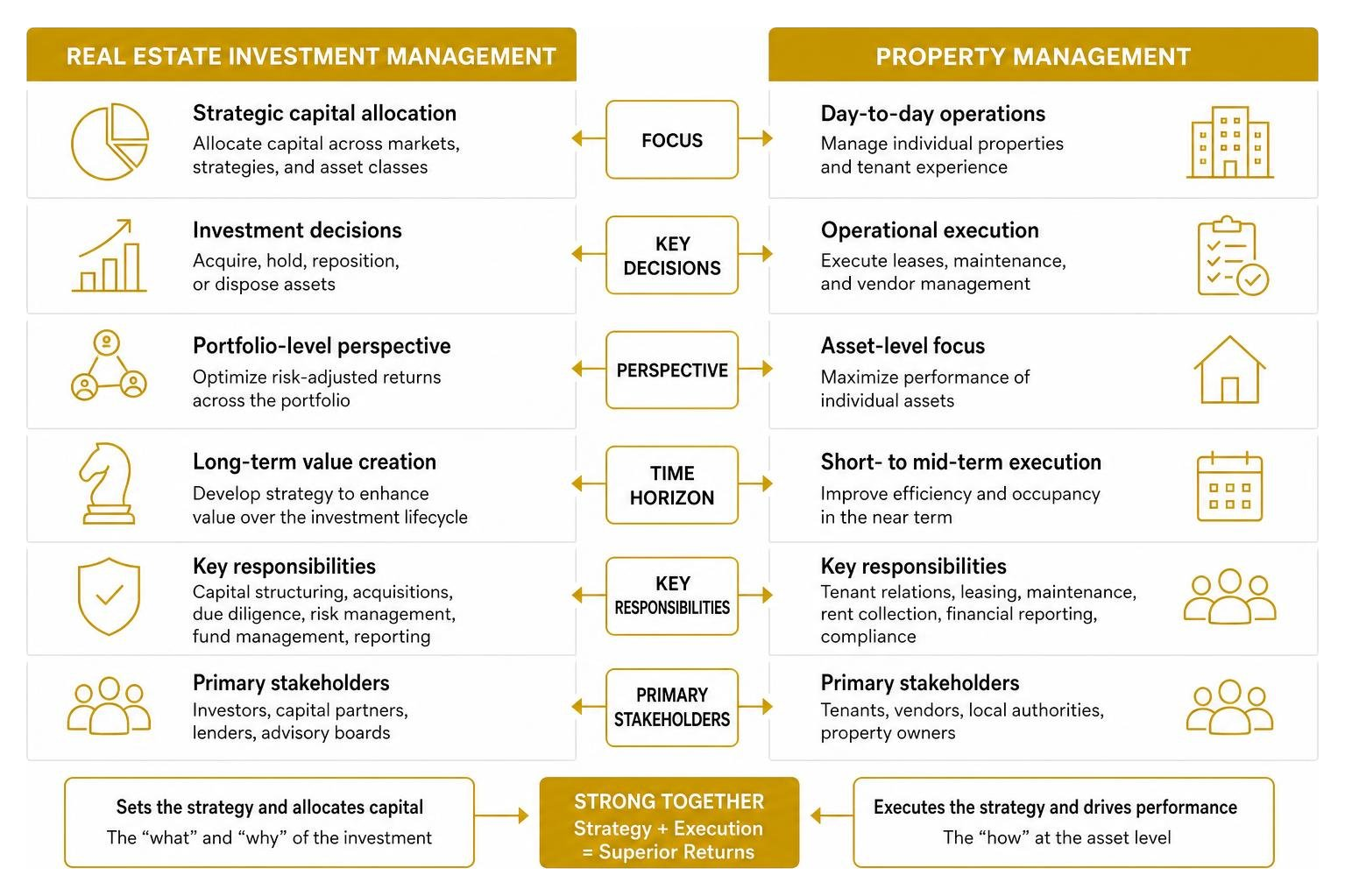
The terms “real estate investment management” and “property management” are often used interchangeably, but they represent distinct, albeit complementary, functions within the real estate ecosystem. Understanding their differences is crucial for both investors and professionals.
Real estate investment management primarily focuses on the strategic deployment and oversight of capital. Investment managers are concerned with portfolio-level decisions, such as:
- Capital structuring: Determining the optimal mix of debt and equity for acquisitions.
- Acquisition and disposition strategy: Identifying opportunities, performing rigorous due diligence, underwriting potential returns, and timing asset sales.
- Risk management: Assessing macro-economic trends, market volatility, and asset-specific risks to protect investor capital.
- Fund management: Overseeing private real estate funds, including investor relations, reporting, and compliance.
- Value creation strategy: Developing a long-term plan for an asset, which might include repositioning, redevelopment, or significant capital improvements.
Firms like Hines and Morgan Stanley Real Estate Investing (MSREI) exemplify sophisticated real estate investment management. They manage vast portfolios, allocate capital across diverse asset classes and geographies, and develop complex strategies to generate superior risk-adjusted returns for their investors. Their focus is on the “what” and “why” of an investment – why acquire this asset, what is its potential, and how does it fit into the broader portfolio strategy.
Property management, on the other hand, is concerned with the day-to-day operational aspects of an individual property or a portfolio of properties. Property managers are the boots on the ground, ensuring the asset functions smoothly and profitably. Their responsibilities include:
- Tenant relations: Screening tenants, managing leases, and addressing tenant concerns.
- Maintenance and repairs: Overseeing property upkeep, coordinating vendors, and ensuring compliance with safety standards.
- Lease administration: Negotiating renewals, enforcing lease terms, and managing vacancies.
- Financial administration: Collecting rent, paying expenses, and providing financial reports to owners.
- Marketing and leasing: Attracting new tenants and minimizing downtime.

While investment management sets the strategic vision, property management executes that vision at the asset level. For example, an investment manager might decide to acquire a value-add multifamily property. It is then the property manager’s role to implement the operational improvements, manage the renovations, attract and retain tenants, and ensure efficient day-to-day operations to achieve the investment manager’s projected returns. A skilled team providing full-service property management can significantly enhance an asset’s performance, directly impacting the investment’s overall success.
The synergy between these two functions is critical. Investment managers rely on accurate, real-time data and insights from property managers to make informed strategic decisions. Conversely, property managers need clear directives and resources from investment managers to effectively operate properties in line with investment objectives. Without strong property management, even the most astute investment strategy can falter, as operational inefficiencies can erode returns and diminish asset value.
Operational expertise and local market intelligence
In the competitive landscape of real estate, deep operational expertise and granular local market intelligence are invaluable assets. These elements allow firms to identify unique opportunities, optimize asset performance, and mitigate risks more effectively than those relying solely on broad market trends.
Leading firms like Hines emphasize that being a direct local operator makes them a better investor. With thousands of professionals operating in hundreds of cities globally, Hines leverages its extensive on-the-ground presence to gain unparalleled insights into local dynamics. This local knowledge is crucial for:
- Strategic partnerships: Cultivating relationships with local brokers, developers, and service providers, which can lead to exclusive access to off-market deals. Dunbar Real Estate Investment Management, for instance, highlights how deep market relationships facilitate their acquisition of value-add assets.
- Deal sourcing and underwriting: Understanding specific submarket nuances, competitive landscapes, and supply-demand imbalances allows for more accurate underwriting and better deal selection. This granular insight helps identify properties that are genuinely undervalued or have significant repositioning potential.
- Asset optimization: Local teams can implement tailored strategies for asset optimization, whether it’s through targeted capital improvements, tenant fulfillment initiatives, or efficient leasing execution. Greystar’s vertical integration, encompassing acquisitions, development, construction, and property operations, demonstrates how combining these functions can capture operational upside throughout an asset’s lifecycle.
- Tenant retention and satisfaction: Proximity to tenants and an understanding of local preferences enable property managers to deliver superior service, leading to higher tenant satisfaction and retention rates. This directly impacts occupancy and cash flow, which are vital for investment performance.
- Regulatory navigation: Local teams are better equipped to navigate complex local zoning laws, environmental regulations, and permitting processes, which can be significant hurdles for out-of-market investors.
Morgan Stanley Real Estate Investing (MSREI) also highlights the importance of leveraging local operating partners to enhance underwriting, due diligence, and asset management. This approach combines a global investment perspective with local market presence, allowing firms to manage risk and identify unique real estate opportunities that might otherwise be missed. The ability to execute strategies directly as a local operator provides better control over property outcomes and maximizes income value, ultimately leading to superior returns for investors.
Financial structuring, risk mitigation, and fee frameworks
At the heart of real estate investment and management lies the intricate process of financial structuring and rigorous risk mitigation. Private equity real estate, in particular, demands a sophisticated approach to capital protection and underwriting to navigate the inherent complexities and potential market volatility.
Mitigating risk in real estate investment and management
Real estate investment, while offering significant potential for returns, is not without its risks. These can range from market-wide downturns to asset-specific operational challenges. Effective risk mitigation involves a multi-faceted approach that considers various asset classes, leverage levels, market volatility, and evolving environmental regulations.

Investment managers like Corten Real Estate Management employ rigorous due diligence, underwriting, and asset management to protect investor capital. Key strategies include:
- Thorough due diligence: This involves an exhaustive examination of a property’s physical condition, legal status, financial history, and market context. Performing the majority of property-level due diligence in-house rather than relying solely on third parties ensures better accountability and accuracy.
- Stress testing and underwriting: Financial models are subjected to various “stress” scenarios, simulating adverse market conditions (e.g., increased vacancies, rising interest rates, declining rents) to assess an investment’s resilience. This helps identify potential weaknesses and quantify downside protection.
- Capital structure de-risking: This involves strategically managing the debt and equity components of an investment. Using non-recourse, non-cross collateralized leverage with loan durations matching asset stabilization timelines can significantly reduce risk. Restructuring capital through partial sales, cash-out refinancings, or interest rate hedges can further de-risk assets.
- Diversification: Spreading investments across different asset classes (e.g., industrial, multifamily, office, hospitality), geographic regions, and risk profiles (Core, Core Plus, Value-Add, Opportunistic) helps cushion against downturns in any single sector or market.
- Environmental, social, and governance (ESG) evaluation: Integrating ESG factors into initial due diligence helps identify and mitigate risks related to environmental regulations, social impacts, and governance practices. This proactive approach protects property performance and aligns with growing investor demand for sustainable investments.
- Active asset management: Regular monthly asset management meetings bringing together property management, construction, legal, and investment teams ensure continuous oversight and prompt response to emerging issues. This hands-on approach, as championed by firms like RMR Group, views vertical integration as a critical risk management strategy, especially in economic environments without cap rate compression.
For individual investors or those managing smaller portfolios, understanding their financial capacity and securing appropriate financing is also a crucial risk mitigation step. Seeking personalized mortgage guidance can help ensure that leverage is used prudently and aligned with investment goals.

Fund fee structures and investor alignment
Private real estate funds typically operate with complex fee structures designed to compensate investment managers and align their interests with those of their investors. Understanding these fees is paramount for investors evaluating potential opportunities.
Common fee components include:
- Management fees: These are typically charged as a percentage of committed capital, invested capital, or net asset value (NAV). They cover the fund manager’s operating expenses, such as salaries, office overhead, and administrative costs. Corten Real Estate Management, for example, notes that management fees generally range from 0.75% to 1.50% of committed capital initially, shifting to equity cost of unrealized investments later.
- Performance fees (carried interest): This is a share of the profits generated by the fund, paid to the investment manager once a certain hurdle rate (minimum return) for investors has been achieved. Carried interest can range from 10% to 30% of profits, with 20% being common. This fee structure is designed to align interests, as managers only earn significant performance fees if their investments perform well for investors.
- Organizational and operating expenses: These cover the costs associated with setting up and running the fund, such as legal fees, audit fees, and administrative expenses. Fund documents detail how these expenses are allocated between the fund and the general partner.
- Property management and construction fees: If the investment manager has affiliated property management or construction entities, they may charge fees for these services. Regulatory disclosures, such as those from Corten, often specify caps on these affiliated fees (e.g., 3.5% of gross revenue for property management or 4% for construction projects under $1M). These are distinct from the fund’s management fees and are typically paid at the asset level.
- Broken deal expenses: Costs incurred during the due diligence phase of potential acquisitions that do not close are typically covered by the fund. Investors should understand how these expenses are allocated and if there are any caps.
Side-by-side management and co-investment: Many firms engage in side-by-side management, where the investment manager also invests their own capital alongside investors in the fund. This practice, often referred to as co-investment, further aligns interests by ensuring the manager has a direct financial stake in the fund’s performance. Hines, for instance, emphasizes co-investment alignment with investors. However, potential conflicts can arise if the manager’s co-investment is structured differently or receives preferential treatment, making transparency crucial.
Fund borrowings, particularly subscription facilities used prior to calling capital, can also impact reported returns (e.g., artificially amplifying net IRR in early cycles) and should be carefully scrutinized by investors. Clear, consistent transparency from investment managers is a best practice to ensure partners are fully informed about the impact of these structures on their returns.
Navigating post-pandemic trends and asset class shifts
The real estate landscape is in a constant state of evolution, and the post-pandemic era has accelerated several key trends. Investment managers must demonstrate agility and foresight, adapting their strategies to market shifts, evolving tenant demands, and the growing imperative for sustainability.
Adapting to hybrid work and tenant demand
The widespread adoption of hybrid work models has profoundly impacted the commercial real estate sector, particularly office properties. Many traditional office buildings face obsolescence as companies re-evaluate their space needs and design preferences. This shift necessitates adaptive strategies from real estate investors and managers.
- Office repositioning: Obsolete office buildings are being reimagined and repurposed. A significant trend is the office-to-residential conversion, transforming underutilized commercial spaces into multifamily housing units. RMR Group highlights projects like the conversion of an office building in Washington, D.C., into residential units, and another in Reston, VA, into a transit-oriented residential community. This strategy addresses both the declining demand for traditional office space and the persistent need for housing in urban centers.
- Multifamily housing resilience: The multifamily sector has shown strong resilience, driven by demographic shifts and continued urbanization. Firms like Greystar focus on rental housing investment management, targeting gateway and urban growth markets with strong employment bases. Value-add strategies in multifamily involve acquiring mismanaged properties at a discount and enhancing them through operational improvements and strategic capital investments.
- Hospitality and experiential assets: While initially hit hard by the pandemic, hospitality assets are recovering, with a renewed focus on unique experiences and localized offerings. Investment strategies now often incorporate elements that cater to evolving leisure and business travel patterns.
- Student housing and mixed-use developments: Specialized sectors like student housing continue to attract investment, especially near growing university campuses. RMR Group’s project transforming an abandoned theater near UNC Wilmington into student housing exemplifies this adaptive reuse. Mixed-use developments, which integrate residential, commercial, and retail spaces, are also gaining traction, creating vibrant, self-contained communities that cater to diverse tenant demands.
These adaptations require deep market analysis, creative development strategies, and the ability to execute complex repositioning projects. The ability to anticipate and respond to shifting tenant demands, such as preferences for flexible workspaces, amenities, and community-focused environments, is crucial for long-term asset value.
ESG principles and environmental regulations
Environmental, Social, and Governance (ESG) factors have moved from being a niche consideration to a central pillar of real estate investment and management. Investors and regulators alike are increasingly scrutinizing the sustainability performance of real estate assets.
- ESG integration: Firms are integrating ESG considerations throughout the investment lifecycle, from initial due diligence to asset management and disposition. This includes evaluating a property’s energy efficiency, water consumption, waste management practices, and social impact on local communities. Corten Real Estate Management explicitly incorporates ESG evaluation into its due diligence process.
- Energy efficiency and decarbonization: A major focus is on reducing the carbon footprint of buildings. This involves investing in energy-efficient technologies (e.g., LED lighting, smart HVAC systems), adopting renewable energy sources (like solar panels), and pursuing green building certifications (e.g., LEED, BREEAM). Hines, for example, publishes thought leadership on how energy could rewire real asset performance, underscoring the importance of this trend.
- Regulatory compliance: Environmental regulations are becoming stricter globally, impacting everything from construction materials to operational emissions. Real estate managers must stay abreast of these evolving laws to ensure compliance and avoid penalties.
- Climate risk assessment: Understanding and mitigating physical climate risks, such as flood exposure, extreme weather events, and rising sea levels, is becoming essential for protecting long-term asset value. This involves conducting climate risk assessments and implementing resilience strategies.
Embracing ESG principles not only addresses regulatory and investor demands but also offers tangible benefits, including lower operating costs, enhanced tenant appeal, and potentially higher asset valuations. It’s a strategic imperative for modern real estate investment and management.
Career development, credentials, and industry networking
For aspiring professionals and seasoned experts alike, continuous learning, earning valuable credentials, and strategic networking are vital for breaking into or advancing within the dynamic field of real estate investment and management.
Advancing through real estate investment and management certifications
Professional certifications and educational programs provide specialized knowledge and signal a commitment to excellence. They can significantly enhance career prospects and earning potential.
- Certified Property Manager (CPM) designation: Offered by the Institute of Real Estate Management (IREM), the CPM is an internationally recognized credential for property managers across all asset classes. It covers essential topics like asset management, ethics, maintenance, and risk management. IREM, celebrating 90 years of industry authority, positions the CPM as the premier property management certification, designed to unlock higher earning potential and build referral networks.
- Certified Commercial Investment Member (CCIM) credential: The CCIM designation is considered the gold standard for commercial real estate professionals. It requires advanced coursework in financial and market analysis, along with extensive industry experience. Programs like the University of Texas at Dallas (UTD) Real Estate Investment Management Certificate program are designed to accelerate the path to the CCIM designation, allowing students to apply coursework directly toward its educational requirements.
- Graduate certificates and educational programs: University programs, such as the UTD Real Estate Investment Management Certificate, offer structured learning that combines academic rigor with real-world application. UTD’s program, ranked highly by Poets & Quants (2026) for Online MBA programs, covers foundational real estate concepts, finance and cash flow underwriting (including software like CoStar and Excel), market analysis, and real estate law and contracts. These programs often serve as pathways to broader graduate degrees (e.g., MBA, MS in Finance) and can fulfill state continuing education requirements.
These certifications and programs provide standardized training, foster ethical leadership, and equip professionals with the analytical tools necessary to excel in real estate investment and management.
Industry associations and mentorship pathways
Beyond formal education, active engagement with industry associations and participation in mentorship programs are crucial for career growth.
- Industry associations: Organizations like IREM provide invaluable platforms for networking, professional development, and staying informed about industry trends. They offer access to courses, publications, and events that cover a wide range of topics from asset management to ethics. These associations foster a sense of community and provide opportunities to connect with peers and leaders.
- Networking opportunities: Attending conferences, workshops, and local chapter meetings allows professionals to build relationships, exchange ideas, and discover new opportunities. Many university programs, such as UTD’s Real Estate Club, actively facilitate networking with industry leaders through case competitions and workshops.
- Mentorship programs: Finding a mentor who can offer guidance, share experiences, and provide career advice can be transformative. Mentorship programs, sometimes facilitated by industry associations or university alumni networks, help aspiring professionals navigate career challenges, gain insights into specific niches, and accelerate their development.
- Ethical standards and best practices: Industry associations often champion ethical conduct and best practices, providing a framework for responsible professional behavior. Adhering to these standards builds credibility and trust within the industry.
Leveraging these resources helps professionals not only gain knowledge but also build a robust professional network that can open doors to new roles, partnerships, and investment opportunities, ultimately enhancing career mobility and leadership potential.
Frequently asked questions about real estate investment and Mmanagement
Investors and aspiring professionals often have similar questions regarding the intricacies of real estate investment and its management. Here, we address some common inquiries to provide further clarity and investor insights into management fundamentals.
How do performance fees and carried interest align investor incentives?
Performance fees, often structured as carried interest, are a cornerstone of private real estate fund compensation designed to align the interests of investment managers with those of their investors. Here’s how:
- Hurdle rates: Carried interest is typically paid only after investors have achieved a predefined minimum return, known as the “hurdle rate” (e.g., an 8% annual return on their invested capital). This ensures that managers are compensated for delivering actual profits, not just for managing capital.
- Profit sharing: Once the hurdle rate is met, the manager receives a percentage of the profits above that threshold (e.g., 20% of profits). This direct profit-sharing mechanism incentivizes managers to maximize returns for investors, as their own compensation is directly tied to the fund’s success.
- Interest alignment: This structure discourages managers from taking excessive risks, as poor performance directly impacts their ability to earn carried interest. Conversely, it motivates them to actively manage assets, identify value-add opportunities, and make strategic decisions that enhance investor returns. The concept of “side-by-side” co-investment, where managers invest their own capital alongside limited partners, further strengthens this alignment, ensuring they have a personal financial stake in the fund’s outcomes.
What should investors evaluate when considering co-investment opportunities?
Co-investment opportunities, where investors place capital directly into specific deals alongside a fund, can offer attractive benefits but require careful evaluation:
- Allocation of broken deal expenses: Investors should understand how expenses incurred for deals that don’t close are allocated. Are co-investors responsible for a pro-rata share, or are these absorbed by the main fund or manager? Corten Real Estate Management, for example, details how transaction fees received are often offset against management fees, which can impact the net cost to investors.
- Fee transparency: Scrutinize the fee structure for co-investments. Are the management fees and carried interest the same as or different from the main fund? Ensure there’s no “double-dipping” on fees.
- Strategy alignment: Confirm that the co-investment aligns perfectly with your investment objectives and the overall fund strategy. Does it represent a core asset, a value-add play, or an opportunistic venture?
- Downside risk: While co-investments can offer potentially higher returns, they often come with higher concentration risk. Evaluate the specific risks of the underlying asset and ensure it fits your risk tolerance.
- Manager alignment: Assess the manager’s track record with co-investments and their commitment to aligning interests. Hines, for instance, emphasizes co-investment alignment as a core part of their strategy.
Why is local operational execution vital for real estate risk management?
Local operational execution is paramount for real estate risk management because it provides granular control and real-time insights that broader, macro-level strategies cannot offer:
- Local market knowledge: Deep understanding of local supply-demand dynamics, tenant preferences, rental rates, and competitive landscapes allows for more accurate underwriting and proactive adjustments. This mitigates risks associated with misjudging market conditions.
- Property-level oversight: Hands-on management ensures that properties are maintained to high standards, operational inefficiencies are promptly addressed, and tenant issues are resolved effectively. This directly impacts occupancy rates, tenant retention, and ultimately, cash flow optimization.
- Active asset management: Local teams can implement targeted value-add strategies, manage renovations, and oversee leasing efforts more effectively. This active engagement helps de-risk assets by improving their performance and marketability. RMR Group emphasizes that vertical integration in commercial real estate is fundamentally a risk management strategy, allowing for greater control over execution in challenging market conditions.
- Regulatory compliance: Local teams are better positioned to navigate and ensure compliance with local building codes, environmental regulations, and landlord-tenant laws, reducing legal and financial risks.
- Early problem detection: Proximity to assets and tenants enables early detection of potential problems, whether they are physical maintenance issues, tenant disputes, or emerging market shifts. This allows for swift intervention, preventing minor issues from escalating into significant risks.
Strong local operational execution translates into better risk control, more stable cash flows, and enhanced asset value, directly contributing to superior investment returns.
Conclusion
Maximizing returns in real estate investment and management demands a sophisticated and integrated approach. It’s a field where strategic capital allocation must be seamlessly interwoven with diligent, hands-on operational execution. We’ve explored how differentiating between investment management and property management, while recognizing their symbiotic relationship, is foundational to success.
The insights from leading firms like Hines, Morgan Stanley Real Estate Investing, and Corten Real Estate Management underscore the critical role of operational expertise, local market intelligence, and rigorous risk mitigation strategies. From meticulous due diligence and stress testing to thoughtful capital structuring and ESG integration, every decision impacts the bottom line.
Furthermore, adapting to post-pandemic trends, such as hybrid work and shifting tenant demands, requires agility and innovation, particularly in the repositioning of asset classes like office buildings. The growing emphasis on sustainability and ESG principles is not just a regulatory imperative but a strategic advantage for long-term value creation.
For professionals, the path to advancement is paved with continuous learning, valuable certifications like the CPM and CCIM, and active engagement with industry associations and mentorship programs. These resources foster expertise, build networks, and uphold ethical standards, driving career mobility.
Successful real estate investment and management is about more than just transactions; it’s about active asset management, strategic portfolio management, and continuous market adaptation. By embracing these principles, investors and professionals can navigate the complexities of the real estate market, mitigate risks, and unlock significant long-term returns.