

Mortgage affordability easing helps the North and Midlands but not London, research finds
Easier mortgage affordability checks are giving buyers tens of thousands of pounds more to borrow, but whether that gets them a home depends on where they live, according to a regional analysis by mortgage broker The Mortgage Genie.
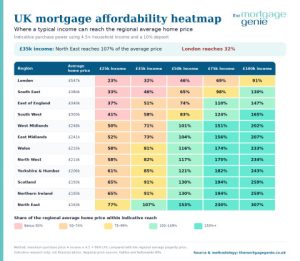
In March 2025 the Financial Conduct Authority told lenders they could apply interest rate stress tests more flexibly, and major lenders have since relaxed their affordability calculations. Nationwide, for example, said in May 2025 that the change allowed its average applicant to borrow £28,000 more.
Where the extra borrowing changes the outcome
In the East and West Midlands, a buyer with a £50,000 income would be £18,500 and £25,500 short of the average home with the least generous lender. With the most generous, the loan covers the full price in both regions.
For a buyer earning £35,000, the deposit needed for an average home falls from £48,500 to £13,500 in Yorkshire and the Humber, from £56,500 to £21,500 in the North West and from £57,500 to £22,500 in Wales. In Scotland and Northern Ireland the same buyer goes from needing £35,500 to needing only a minimum deposit.
In London, where the average home costs £547,000, the deposit needed by a buyer with a £50,000 income falls from £324,500 to £272,000, which is still about half the price. In the South East it falls from £161,500 to £109,000, still more than a quarter of the £384,000 average.
The regional picture in full
- North East: average home £163,000. A buyer earning £25,000 needs £55,704 with the least generous lender and £25,500 with the most generous.
- Yorkshire and the Humber: average home £206,000. A buyer earning £35,000 needs £48,500 with the least generous lender and £13,500 with the most generous.
- North West: average home £214,000. A buyer earning £35,000 needs £56,500 with the least generous lender and £21,500 with the most generous.
- Wales: average home £215,000. A buyer earning £35,000 needs £57,500 with the least generous lender and £22,500 with the most generous.
- Scotland: average home £193,000. A buyer earning £35,000 needs £35,500 with the least generous lender and only a minimum deposit with the most generous.
- Northern Ireland: average home £193,000. A buyer earning £35,000 needs £35,500 with the least generous lender and only a minimum deposit with the most generous.
- East Midlands: average home £241,000. A buyer with a £50,000 income needs £18,500 with the least generous lender and only a minimum deposit with the most generous.
- West Midlands: average home £248,000. A buyer with a £50,000 income needs £25,500 with the least generous lender and only a minimum deposit with the most generous.
- South West: average home £303,000. A buyer with a £50,000 income needs £80,500 with the least generous lender and £28,000 with the most generous.
- East of England: average home £340,000. A buyer with a £50,000 income needs £117,500 with the least generous lender and £65,000 with the most generous.
- South East: average home £384,000. A buyer with a £50,000 income needs £161,500 with the least generous lender and £109,000 with the most generous.
- London: average home £547,000. A buyer with a £50,000 income needs £324,500 with the least generous lender and £272,000 with the most generous.
Other findings
The tests also showed that who the borrower is matters as much as where they buy. At an income of £25,000, the Halifax and Lloyds calculators showed a self-employed applicant £104,765, which is £32,735 less than an employee on the same income. With £800 a month in existing debt repayments, NatWest’s figure for an employed applicant earning £25,000 fell from £111,200 to £19,800, and Santander’s calculator offered no mortgage at all.