

Business sale contract template: 10 essential tips for success
Sponsored content. This article was supplied by a third party and Business Money has been paid to publish it.
Navigating business sales and exit strategies
Navigating business exit strategies

As of May 2026, the business landscape continues to evolve rapidly, driven by technological advancements, shifting market trends, and dynamic economic conditions. For many business owners, planning an exit strategy is not just about the end of an era, but a strategic move to maximize value and secure their legacy. A well-defined exit strategy is crucial, laying the groundwork for a successful transition long before a sale is even considered. This foresight allows owners to proactively address potential challenges and position their business for optimal market appeal.
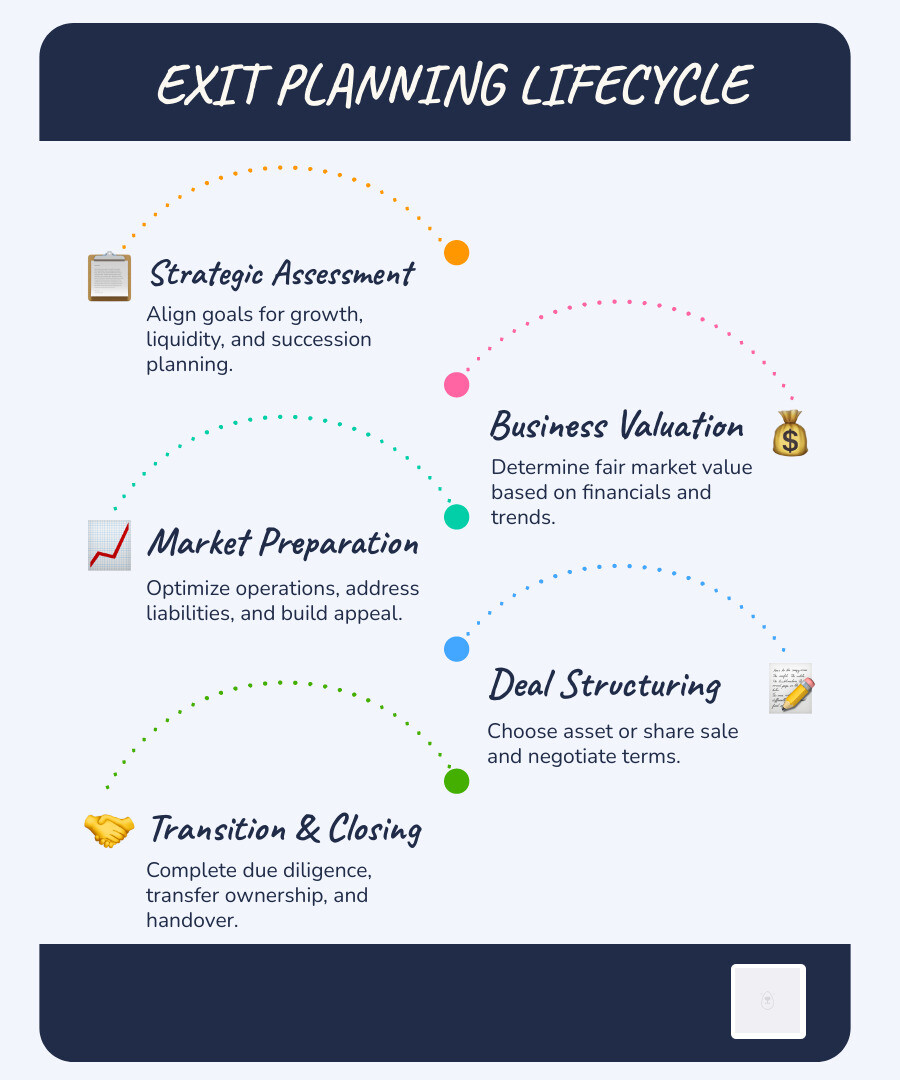
Understanding the various facets of a business exit is the first step towards a smooth and profitable transition. It’s about more than just the financial transaction; it involves crafting a meaningful exit beyond just the price, ensuring that the business continues to thrive under new ownership. For a deeper dive into this, consider exploring resources on Selling Your Business: Crafting a Meaningful Exit Beyond Just the Price. Furthermore, for complex transactions like mergers and acquisitions, specialized advisory services become indispensable, offering expert guidance through every stage. You can learn more about these services through Mergers and Acquisitions Advisory Services.
Defining business exit strategies
An exit strategy is a comprehensive plan that outlines how an entrepreneur will leave their company. It’s a critical component of long-term business planning, aligning with strategic goals for growth, financial liquidity, and often, succession planning. Without a clear strategy, owners might find themselves unprepared when an opportunity arises or when personal circumstances necessitate a departure.
Common types of business exit strategies include:
- Mergers and acquisitions (M&A): Selling the business to another company, often a larger entity looking to expand its market share, acquire technology, or eliminate competition.
- Initial public offering (IPO): Taking the company public by offering shares on a stock exchange. This is typically for larger, high-growth companies.
- Management buyout (MBO): Selling the business to its existing management team. This can provide a smooth transition and maintain company culture.
- Family succession: Transferring ownership and management to a family member, preserving the business’s legacy.
- Liquidation: Winding down the business and selling off its assets. This is often a last resort but can be a planned strategy in certain scenarios.
Each strategy carries unique implications for valuation, timing, and the ultimate structure of the sale, underscoring the need for careful consideration and professional advice.
Implementing business exit strategies
Implementing a business exit strategy requires meticulous planning and execution. Key factors include timing, which can significantly impact valuation, and current market conditions. A seller’s market might yield a higher price, while a buyer’s market could require more negotiation. Understanding the current economic climate and industry trends is paramount.
The process often involves several critical steps, from preparing the business for sale to closing the deal. A detailed roadmap, such as a 10 Steps Selling Process, can guide owners through each stage, ensuring no critical element is overlooked. Throughout this journey, professional advisors—including business brokers, lawyers, and accountants—play an indispensable role. They provide expertise in valuation, legal drafting, tax implications, and negotiation, safeguarding the interests of all parties. Effective stakeholder communication is also vital, ensuring employees, customers, and suppliers are managed appropriately during the transition to maintain business continuity and value.
Structuring the deal with a business sale contract template

Once an exit strategy is chosen and a buyer identified, the focus shifts to structuring the deal, with the CFO business sale contracts becoming the central instrument. This document formalizes the agreement between buyer and seller, detailing the terms and conditions of the transaction. It’s a comprehensive legal instrument that transfers not just physical assets but also intangibles like goodwill, customer lists, and existing contracts. For those looking for a practical starting point, a Business Sale Agreement Document Template can be incredibly useful, providing a customizable framework. Even a sample purchase and sale agreement, like this one from the state of Alabama, can offer valuable insights into typical clauses and structures.
A business sale contract, typically averaging 34 pages with 21 sections and 10 schedules, is designed to ensure clarity on all aspects of the sale. It covers everything from the identification of parties to the intricate details of asset allocation and payment terms. This extensive guide aims to demystify these components, helping you understand how to customize and use a template effectively.
Asset vs. share sales
One of the most fundamental decisions in structuring a business sale is whether to conduct an asset sale or a share sale. This choice has significant implications for entity retention, liability transfer, and tax consequences for both buyer and seller.
Asset sale: In an asset sale, the seller retains ownership of the legal entity (e.g., corporation, LLC), but sells individual assets of the business to the buyer. These assets can include tangible items like equipment, inventory, and real estate, as well as intangible assets such as intellectual property, customer lists, and goodwill.
- Entity retention: The seller’s legal entity continues to exist, often with residual liabilities or for other business purposes.
- Liability transfer: Generally, the buyer only assumes liabilities explicitly specified in the agreement. The seller typically retains all other historical liabilities of the selling entity. This can be advantageous for buyers seeking to limit their exposure to past issues.
- Tax consequences: For the seller, an asset sale can sometimes result in “double taxation” if the selling entity is a C-corporation (tax on the sale of assets at the corporate level, and then tax on the distribution of proceeds to shareholders). For the buyer, the purchase price can be allocated among the acquired assets, allowing for a new depreciation schedule and a stepped-up cost basis, which can provide future tax benefits.
- Flexibility: Sellers can often exclude specific assets (e.g., cash, accounts receivable, certain records) from the sale.
Share sale (or stock sale): In a share sale, the buyer purchases the shares (or ownership interests) of the selling entity directly from the shareholders. The legal entity itself remains intact, but its ownership changes hands. This type of sale is only applicable to corporations or other entities with transferable ownership units.
- Entity transfer: The entire business, including its legal identity, contracts, and existing relationships, transfers to the buyer.
- Liability transfer: The buyer inherits all assets and liabilities of the company, known and unknown, historical and current. This is a significant consideration for buyers, necessitating thorough due diligence.
- Tax consequences: For the seller, a share sale often results in capital gains tax, which can be more favorable than the double taxation scenario of an asset sale. For the buyer, there is generally no stepped-up basis for the assets, meaning the depreciation schedule remains as it was under the previous ownership.
- Simplicity: From a contractual perspective, a share sale can sometimes be simpler as individual asset transfers are not required.
The choice between an asset and share sale is complex and should always involve legal and tax professionals. For those in California, a Free Business Sale Agreement Template – California – AI Lawyer can offer state-specific guidance, but customization and expert review are always recommended.
Purchase price and payment terms
The purchase price and its payment structure are central to any business sale agreement. The agreement must clearly define the total purchase price, including any deposits, closing costs, and interest rates if applicable. Often, the purchase price is determined based on the fair market value of the business and its assets. The apportionment of the purchase price between goodwill, plant/equipment, and stock can have different tax consequences, making strategic allocation a key consideration for tax planning.
Payment terms can be structured in various ways:
- Lump Sum payment: The entire purchase price is paid at closing.
- Installment schedule: Payments are spread out over a period, often with interest.
- Earn-outs: A portion of the purchase price is contingent on the business achieving specific performance targets post-sale. This can align the interests of both buyer and seller.
- Escrow: A portion of the purchase price is held by a third party (escrow agent) for a specified period to cover potential indemnification claims or post-closing adjustments.
Deposits often serve as liquidated damages, meaning if the buyer fails to adhere to the terms of the agreement, the seller may retain these deposits. Conversely, if the seller defaults, the buyer may be entitled to their return and other remedies. A detailed contract, such as the Contract for the Purchase and Sale of a Business filed with the SEC, illustrates the complexity and precision required in defining these financial terms. It’s crucial that the agreement specifies the total purchase price inclusive of all furnishings, fixtures, and equipment for all assets collectively, rather than itemizing per asset.
Essential clauses and legal protections

Beyond the financial terms, a robust business sale contract template includes critical clauses designed to protect both parties and ensure a smooth transfer of ownership. These legal protections are paramount in mitigating risks and addressing potential disputes. Protecting sensitive information throughout the sale process is also vital, and understanding The Art of Confidentiality: Protecting Your Business During the Sale Process can help safeguard proprietary data. Furthermore, evaluating offers effectively is a skill that can significantly impact the outcome, making resources like Sealing the Deal: A Guide to Evaluating Offers When Selling Your Business highly valuable.
Representations and warranties
Representations and warranties (R&Ws) are statements of fact made by the seller about the business being sold. They cover various aspects, including financial accuracy, legal compliance, asset ownership, and the absence of undisclosed liabilities. These statements are crucial because they provide the buyer with assurances about the condition of the business and serve as a basis for indemnification if a representation proves to be false or a warranty is breached.
Key aspects of R&Ws include:
- Financial accuracy: Assurances that financial statements are accurate and prepared in accordance with generally accepted accounting principles (GAAP).
- Legal compliance: Confirmation that the business has operated in compliance with all applicable laws and regulations.
- Asset ownership: Guarantee that the seller has clear title to all assets being transferred and that they are free of liens or encumbrances.
- Disclosure schedules: Detailed schedules attached to the agreement that provide exceptions or additional information to the general R&Ws.
- Survival periods: Specifies how long the R&Ws remain enforceable after closing.
- Indemnification: A clause stipulating that if a representation or warranty is breached, the breaching party will compensate the non-breaching party for any resulting losses. Escrow accounts are often used to secure these indemnification obligations.
Both the buyer and seller provide R&Ws, though the seller’s are typically more extensive. These clauses are heavily negotiated and form a cornerstone of the buyer’s protection.
Restrictive covenants
Restrictive covenants are provisions designed to protect the buyer’s investment and the value of the acquired business post-closing. They typically limit the seller’s ability to compete with or solicit from the acquired business.
Common restrictive covenants include:
- Non-compete clause: Prevents the seller from engaging in a similar business within a specified geographic radius and for a defined duration after the sale. For example, a non-compete might restrict the seller from operating a coin laundry business within 3 miles for 3 years.
- Non-solicitation clause: Prohibits the seller from soliciting former employees or customers of the sold business. This protects the buyer’s workforce and customer base.
- Confidentiality provisions: Requires the seller to keep proprietary information, trade secrets, and other confidential data of the business private, both during and after the sale.
- Non-disparagement clause: Prevents the seller from making negative statements about the business, its new owner, or its employees.
The enforceability of restrictive covenants can vary by jurisdiction, and courts often scrutinize their scope (geographic radius, duration, and activities restricted) to ensure they are reasonable and do not unduly restrict competition. These clauses are crucial for safeguarding the goodwill and intellectual capital transferred in the sale.
Due diligence and the closing process
The period leading up to the closing of a business sale is dominated by due diligence, a critical investigative process where the buyer thoroughly examines the seller’s business. This exhaustive review is designed to verify the accuracy of the seller’s representations and uncover any potential risks or liabilities. For anyone considering buying an existing business, due diligence is an indispensable step to make an informed decision. Once due diligence is complete and the closing nears, ensuring a smooth handover from the seller to the buyer becomes paramount, a process that can be further understood through resources like Ensuring a Smooth Handover: The Seller to Buyer Transition.
Contingencies, which are conditions that must be met before the sale can be finalized, are often built into the business sale agreement. These can include securing financing, obtaining necessary third-party consents (e.g., landlord approval for a lease assignment), or receiving regulatory approvals. The agreement also specifies the closing deliverables—the documents and payments that must be exchanged on the closing date.
The due diligence checklist
A comprehensive due diligence checklist is essential for the buyer to assess the target business thoroughly. This checklist typically covers:
- Financial records: Review of audited financial statements, tax returns, accounts receivable and payable, and cash flow projections.
- Legal documents: Examination of corporate records, contracts with customers and suppliers, litigation history, and intellectual property registrations.
- Asset verification: Physical inspection of equipment, inventory stock-take, and verification of real estate titles or lease agreements.
- UCC searches: Uniform Commercial Code searches to identify any liens or security interests on the business’s assets.
- Tax clearance: Obtaining certificates from tax authorities confirming no outstanding tax liabilities.
- Lease assignments: Ensuring that existing leases can be successfully assigned to the buyer.
- Intellectual property: Review of patents, trademarks, copyrights, and domain names to confirm ownership and enforceability.
- Employee contracts: Examination of employment agreements, benefits plans, and compliance with labor laws.
If any issues arise during due diligence, the buyer may renegotiate terms, request indemnification, or even withdraw from the deal. The agreement typically sets a deadline for due diligence completion and outlines the consequences if issues are found.
Closing and post-closing management
The closing is the formal event where ownership of the business officially transfers from the seller to the buyer. At this point, all conditions precedent have been satisfied, and the parties execute the final documents. Key deliverables at closing typically include:
- Bill of sale: A document transferring ownership of tangible assets.
- Assignment agreements: For contracts, intellectual property, and leases.
- Funds transfer: The buyer remits the remaining purchase price.
- Promissory notes: If seller financing is involved.
- Non-compete agreements: Signed by the seller.
Post-closing management involves fulfilling ongoing obligations and ensuring a smooth transition. This often includes:
- Training periods: The seller might agree to provide a specified period of training to the buyer or key employees to ensure continuity of operations.
- Working capital adjustments: Final adjustments to the purchase price based on the actual working capital of the business at closing.
- Knowledge transfer: The seller sharing critical operational knowledge, customer relationships, and strategic insights.
- Transition services: The seller might provide temporary administrative, IT, or other support services to the buyer.
Careful attention to these post-closing details is crucial for the long-term success of the acquired business and to prevent future disputes.
Frequently asked questions about business sales
Navigating a business sale often brings forth a multitude of questions from both buyers and sellers. Here, we address some of the most common inquiries related to business sale agreements and the overall process.
What is the primary purpose of a business sale agreement?
The primary purpose of a business sale agreement is to serve as a legally binding contract that outlines the terms and conditions under which a business (or its assets/shares) is transferred from a seller to a buyer. It ensures clarity, mitigates risks, and provides legal protection for both parties. This comprehensive document defines the scope of the sale, the purchase price, payment terms, representations and warranties, liabilities, and the processes for dispute resolution. Essentially, it acts as a roadmap for the entire transaction, ensuring that ownership transfer is executed in compliance with agreed-upon terms and applicable laws.
How are liabilities handled in an asset sale?
In an asset sale, liabilities are typically handled with a clear distinction: the seller generally retains most of the historical liabilities associated with the selling entity, while the buyer assumes only those liabilities explicitly agreed upon in the contract. This is a key advantage for buyers, as it allows them to acquire assets without inheriting the seller’s past financial or legal obligations. However, there are exceptions and nuances:
- Assumed debts: The buyer might agree to assume specific debts or contracts (e.g., equipment leases, certain customer contracts) as part of the deal, often in exchange for a lower purchase price.
- Seller indemnity: The seller typically provides indemnities to protect the buyer from any undisclosed or retained liabilities.
- Asset-specific liens: Any liens attached directly to specific assets (e.g., a mortgage on real estate) would transfer with the asset unless cleared by the seller.
- Tax obligations: The seller remains responsible for taxes incurred prior to the closing date.
- Creditor notification: In some jurisdictions, laws (like bulk sales acts) may require notification to creditors to ensure the seller’s liabilities are addressed.
It is crucial for the agreement to explicitly detail which liabilities are assumed by the buyer and which remain with the seller to prevent future disputes.
What role do brokers and lawyers play in the process?
Business brokers and lawyers are indispensable professionals in the business sale process, each playing distinct yet complementary roles:
- Business brokers: Market access: They help sellers find qualified buyers and buyers find suitable businesses by leveraging their networks and market knowledge.
- Valuation: They assist in valuing the business, helping to set a realistic asking price.
- Negotiation: Brokers act as intermediaries, facilitating negotiations between parties to reach mutually agreeable terms.
- Process management: They guide both parties through the complex selling process, from initial inquiry to closing, often coordinating due diligence and documentation.
- Lawyers (M&A attorneys): Drafting and review: Lawyers draft, review, and negotiate the business sale agreement and all ancillary legal documents, ensuring they are legally sound and protect their client’s interests.
- Compliance: They ensure the transaction complies with all relevant corporate, commercial, and regulatory laws.
- Risk mitigation: Lawyers identify and advise on potential legal risks, such as undisclosed liabilities, litigation, or intellectual property issues.
- Due diligence: They conduct legal due diligence, examining contracts, permits, and corporate records.
- Structuring advice: They advise on the optimal legal structure for the sale (asset vs. share sale) based on legal and tax implications.
While brokers focus on the commercial aspects and deal facilitation, lawyers concentrate on the legal enforceability, risk management, and compliance of the transaction. Both are essential for a successful and legally secure business sale.
Conclusion
The journey of selling a business is multifaceted, demanding strategic execution, professional guidance, and meticulous attention to legal detail. As we look ahead to May 2026, the importance of a robust business sale contract template cannot be overstated. It is the bedrock upon which a successful transaction is built, offering legal certainty and protecting the interests of both buyer and seller.
By understanding the nuances of asset versus share sales, structuring purchase prices effectively, and incorporating essential legal protections like representations, warranties, and restrictive covenants, business owners can navigate this complex process with confidence. Engaging experienced professionals—from brokers and lawyers to accountants—is not merely an expense but an investment that safeguards long-term value and facilitates a smooth transition. A well-crafted business sale agreement is the key to securing a meaningful exit and ensuring a lasting legacy for the business.