

Scotland’s open-road economy: What fixed-asset tourism models are starting to miss
Sponsored content. This article was supplied by a third party and Business Money has been paid to publish it.
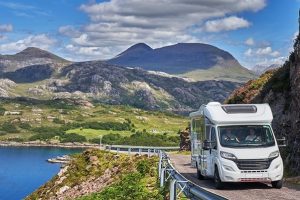 The tourism economy of Scotland has always been dependent upon fixed-asset investment: hotels, resorts, and ticketed attractions. As these pillars bring in good money, their stiff structure is becoming more and more incompatible with a travelling populace that cherishes fluidity, decentralised expenditure. A further examination of visitor trends shows that there is an increasing lack of connection and that it is the mobile tourism model, specifically campervan travel that is starting to bridge the gaps.
The fixed-asset models focus on economic gain, often overlooking broader economic growth. One of the hotels in the town of Inverness will capture the amount of money spent by guests on rooms and food, but little may reach the small loch-side village. These properties also have acute seasonality, with occupancy ranging between near 100% in August to single figures in November. Capital is locked into buildings that are not fully utilised throughout the year, and labour continues to be a persistent challenge. The model is effective at scale but fragile at the boundaries of the calendar and geography.
A mobile, distributed model is the alternative that is coming into strong in Scotland. VisitScotland data show that motorhome and campervan overnight stays in local car parks and informal campsites as facilitated by bunkcampers.com have increased significantly, with spending being dispersed across rural petrol stations, independent grocers, farm shops, and community-run sites. It is not a zero-sum game: instead of crowding out hotel revenues, it is actually opening up economic corridors through which fixed assets would hardly ever touch.
The purchase of venison steaks and craft ale in Ullapool, on a drizzly Tuesday in October, by a couple in a campervan, is incremental revenue of high margin to micro-businesses.
This change is in part structural. The recent reconsideration of work and increasing cost of capital intensive hotel projects has made mobility model more appealing. It needs less up-front sunk cost on the part of the user; it provides the user with real itinerary agility; it leaves a lighter footprint both financially and environmentally in the hands of the user. Further, the demographics of such travellers are changing. They are not low-end backpackers but can often be well-capitalised couples and families who are redistributing disposable income towards experiences rather than possessions. Trade agencies statistics indicate that the average daily expenditure of a touring car user in consideration of food, fuel and attractions, compares to that of a guest in a mid-range hotel, but with a more widely distributed geographical location.
This means that policy makers need to review infrastructure investment once more. It is not just about the provision of more waste-disposal points but rather about the need to acknowledge mobile tourism as a legitimate and high-value economic pillar. The landscape of Scotland is a resource that can only be fully appreciated when in motion and the emergence of Scottish campers can be seen as a logical response in the market. Bunk Campers, whose hub in Edinburgh is a launch point in dispersed spending into the Borders and the Highlands, is one such provider attuned to this real economy.
The future of the tourism economy in Scotland might lie less in the construction of additional beds in the traditional locations and more in the facilitation of movement by using the places that are too often ignored.