

Studying physical education as a coach: Turning experience into better athlete development
Sponsored content. This article was supplied by a third party and Business Money has been paid to publish it.
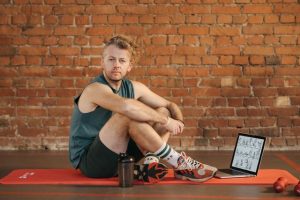
Photo by Pavel Danilyuk
Studying physical education at the graduate level can change how a coach sees everyday decisions. Practice design, conditioning, motivation, athlete evaluation, injury prevention, and leadership may look like separate responsibilities, but they are closely connected. Academic study gives coaches a framework for understanding those connections instead of relying entirely on habit or personal experience.
For working coaches, useful study should influence what happens with athletes while developing deeper analytical skills. The goal is not simply to collect more drills. It is to understand why a method is appropriate, evaluate whether it works, and adjust it for the athletes in front of you.
Study coaching as a discipline, not just a craft
Experience teaches valuable lessons, but it can also reinforce routines that have never been examined closely. Graduate study creates space to investigate the principles behind coaching decisions: how athletes learn, how physical preparation is structured, how motivation differs between individuals, and how ethics shape leadership.
For professionals who want to study without leaving their current roles, an MS physical education coaching degree can provide that structure. Southwest Minnesota State University offers its program in a 100% online, 34-credit format designed for completion in two years while taking two classes per semester. Courses are team-taught by degree-holding professionals and working coaches, while two advanced coaching practicums provide opportunities to apply learning with athletes and teams. Students also finish with a portfolio aligned with National Association of Sport and Physical Education standards.
That format lets coaches connect academic ideas with situations they already encounter in practices, games, and athlete development.
Design practice with a clear purpose
A practice can look busy without being productive. Studying physical education helps coaches distinguish activity from intentional development.
Start with the outcome a session should produce. If athletes need to improve a skill, tactical decision, or physical quality, drills should create opportunities to work specifically toward it. Coaches can then decide how instruction, repetition, feedback, rest, and progression fit together.
This makes evaluation easier. Instead of asking whether practice “went well,” consider whether athletes demonstrated the intended improvement and what evidence supports that conclusion. Purposeful planning turns practice from a collection of familiar activities into a learning environment.
Connect conditioning to the sport
Physical conditioning should support what athletes actually need to do. A program copied from another sport, age group, or competitive level may create fatigue without developing the right capacities.
Studying conditioning principles helps coaches think about workload, recovery, progression, and competition demands. It also encourages coordination between conditioning and technical practice rather than treating them as unrelated parts of the week.
More work is not automatically better work. Coaches need to recognize when an athlete requires additional stimulus and when recovery is more productive, especially during congested competition schedules or intense training periods.
Use psychology to understand performance
Athletes do not arrive at practice as identical performers. Confidence, anxiety, attention, motivation, expectations, and previous experiences can influence how they respond to coaching.
Performance psychology gives coaches a more useful vocabulary for these differences. Instead of labeling an athlete unmotivated after a poor session, a coach can consider communication, goals, feedback, pressure, and the surrounding environment.
The lesson is not to become an amateur therapist. It is to recognize that performance has psychological as well as physical dimensions and to know when a concern falls outside the coach’s role and requires appropriate professional support.
Evaluate athletes without reducing them to numbers
Data can improve coaching when measurements answer useful questions. Testing athletes simply because a metric is easy to collect can create information without insight.
Physical education study encourages more deliberate evaluation. What does a test measure? Is it reliable enough to influence a decision? How does it relate to the sport? What context is needed before interpreting the result?
Numbers should complement observation. Athlete development may also involve technical execution, decision-making, consistency, communication, and responses to pressure. Combining quantitative information with structured observation creates a fuller picture than a spreadsheet alone.
Make injury prevention part of planning
Coaches cannot eliminate injuries, but they can make athlete welfare part of everyday decisions. That means considering progression, conditioning, recovery, technique, equipment, environment, and communication rather than treating injury prevention as an isolated subject.
Education also clarifies professional boundaries. Diagnosing and treating injuries belongs to qualified healthcare professionals. A coach should recognize concerns, follow established protocols, communicate with relevant personnel, and avoid pressuring athletes to return before appropriate clearance.
A healthy team culture also makes it easier for athletes to report pain early instead of hiding problems because they fear losing their position.
Develop a coaching philosophy you can defend
Many coaches have values they describe as a philosophy, but studying the field can reveal whether daily behavior actually reflects those values.
If development is a priority, how is playing time handled? If athlete welfare matters, what happens when competitive pressure conflicts with recovery? If respect is central, how do staff respond after mistakes?
Ethics, sport law, leadership, and educational principles provide useful ways to examine these questions. A coaching philosophy becomes meaningful when it guides difficult decisions rather than existing only in a handbook.
Writing down core principles and revisiting them during the season can expose gaps between stated intentions and actual practice.
Turn research into better coaching decisions
Research methods may seem distant from practices and competition, but they help coaches become better consumers of information. Sport is full of new training methods, performance claims, technology, and confident advice.
Understanding basic research and statistics makes it easier to ask useful questions. Who was studied? What was measured? How meaningful was the result? Does the finding apply to your athletes?
The same mindset works inside a team. Coaches can establish a goal, track appropriate indicators, review results, and adjust rather than changing methods after one good or bad week.
Studying physical education is ultimately valuable when knowledge changes behavior. For a coach, that can mean more intentional practices, better communication, smarter conditioning, clearer evaluation, and decisions grounded in athlete development rather than tradition. Graduate education cannot replace experience on the field, but it can provide tools for examining that experience more critically and turning years of coaching into a more deliberate system for helping athletes improve.