

The art of the sit: Why designer dining chairs are the ultimate room anchors
Sponsored content. This article was supplied by a third party and Business Money has been paid to publish it.

Photo by Engin Akyurt
When entering a dining room, the eye naturally searches for a focal point that balances form and function. While the dining table often serves as the literal center of the room, it is the selection of designer dining chairs that truly defines the character and architectural rhythm of the space. These pieces are far more than mere seating; they act as the ultimate room anchors, grounding the interior design while providing a sophisticated touch that reflects the homeowner’s personal style. By choosing pieces that prioritize both aesthetic innovation and tactile comfort, a simple meal is transformed into a curated experience.
The shift from utility to functional art
In the world of high-end interior design, the boundary between furniture and art has become increasingly porous. For readers of Architectural Digest or The Design Files, the appeal of a home lies in its ability to tell a story through curated objects. Dining chairs are uniquely positioned in this narrative because they are experienced both visually and physically.
A well-designed chair must support the body while engaging the mind. This duality is what makes designer furniture a worthwhile investment for those looking to elevate their living standards. When a chair is crafted with intention, it ceases to be a background object and becomes a conversation piece. The sculptural quality of modern seating allows it to command attention, standing as a testament to the homeowner’s appreciation for craftsmanship and detail.
Materials as the foundation of luxury
The soul of a premium dining chair lies in its materiality. In an era of mass production, the return to organic, high-quality materials marks a shift toward “slow design.” Brands like Kave Home have championed this movement by focusing on materials that offer longevity, beauty, and environmental responsibility.
The timeless elegance of solid ash and oak
Solid wood remains the gold standard for high-end furniture. Ash and oak, in particular, are favored for their durability and the distinct beauty of their grain patterns. Ash wood is celebrated for its pale, creamy hues and flexibility, which allows designers to create fluid, organic shapes. Oak, on the other hand, offers a sense of heritage and strength, with a prominent grain that adds texture to a room.
Using FSC-certified woods is no longer just a trend; it is a commitment to the planet. For the discerning homeowner, knowing that their furniture comes from sustainably managed forests adds a layer of “invisible luxury.” The tactile warmth of a hand-finished oak frame provides a grounding element that synthetic materials simply cannot replicate.
The textural allure of chenille and bouclé
If wood provides the bones of a chair, the upholstery provides its personality. Current design trends have seen a massive resurgence in highly tactile fabrics. Chenille, with its velvety pile and slight sheen, offers a sophisticated softness that invites guests to linger at the table long after the meal has ended.
Bouclé, specifically seen in iconic silhouettes like the “Ciselia” chair, has become a staple in contemporary luxury interiors. The looped fibers of bouclé create a nubby, irregular surface that catches the light and adds depth to monochromatic palettes. These textures serve a dual purpose: they soften the hard angles of a dining room and provide a sensory experience that enhances the overall “hygge” or comfort of the home.
Iconic silhouettes: The power of the profile
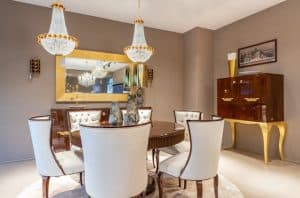
Photo by Max Vakhtbovych
The silhouette of a chair is its most defining visual characteristic. In a room filled with rectangular tables and linear walls, a chair with an unexpected shape can break the visual monotony and add architectural interest.
The architectural boldness of the 3-legged “Granite” chair
One of the most striking examples of furniture as functional art is the 3-legged “Granite” chair. Most traditional chairs rely on the stability of four legs, but a tripod design challenges our perceptions of balance and gravity. This silhouette is inherently sculptural. From every angle, the 3-legged chair presents a different profile, making it an ideal choice for open-plan living areas where the back of the chair is frequently visible.
By reducing the structure to its essential elements, the “Granite” chair emphasizes the beauty of its solid ash construction. It feels modern yet ancient, reminiscent of primitive stools but refined through precision engineering. It is a bold choice for a homeowner who wants their dining space to feel like a gallery.
The soft curves of the “Ciselia” bouclé
In contrast to the sharp architectural lines of tripod chairs, the “Ciselia” style focuses on the power of the curve. Curved furniture is known to create a sense of calm and flow within a space. The “Ciselia” bouclé chair combines a sleek, often metallic frame with a rounded, plush seat and backrest.
The juxtaposition of a thin, industrial frame with the heavy, cloud-like texture of bouclé creates a balanced aesthetic. This silhouette works perfectly in “soft minimal” interiors, where the goal is to keep the space uncluttered but warm and inviting.
Why chairs are the ultimate room anchors
The term “room anchor” usually refers to a large piece of furniture, like a sofa or a rug, that holds the layout together. However, dining chairs serve as “micro-anchors.” Because they are used in sets, they create a repetitive visual rhythm that can define the boundaries of a dining area within a larger room.
When you choose a chair with a distinct personality, you are setting the tone for the entire home. A set of minimalist wood chairs suggests a clean, Scandinavian-inspired lifestyle, while velvet-upholstered chairs with gold accents lean toward a more maximalist, glamorous aesthetic.
Furthermore, dining chairs are one of the few pieces of furniture that move. They are pulled out, tucked in, and rotated. This movement means they are constantly interacting with the light and the surrounding decor. A designer chair is built to look beautiful from 360 degrees, ensuring that whether the table is empty or full, the room remains visually composed.
Investing in longevity and sustainability
For the audience of The Design Files or Architectural Digest, luxury is increasingly defined by quality over quantity. The “Art of the Sit” is about investing in pieces that will age gracefully. High-quality woods like ash and oak develop a patina over time, telling the story of years of family gatherings and shared meals.
By choosing brands that prioritize FSC certification and artisanal manufacturing processes, homeowners are making a statement about their values. Sustainability and high-end aesthetics are no longer mutually exclusive; in fact, the most prestigious contemporary designs are those that honor the natural world.
Conclusion: Creating a curated home
Elevating a home from a functional living space to a designer sanctuary requires a keen eye for detail and an appreciation for craftsmanship. Designer dining chairs are the secret weapon of interior designers because they bridge the gap between art and utility.
Whether it is the raw, tectonic beauty of a 3-legged ash chair or the cozy, sophisticated embrace of a bouclé-wrapped seat, these pieces do more than provide a place to sit. They anchor the room, provide a tactile connection to nature through sustainable woods, and serve as a daily reminder of the beauty found in thoughtful design. When you invest in the art of the sit, you are not just buying furniture; you are curated a lifestyle of elegance and intention.