

The business opportunity behind premium cycling components
Sponsored content. This article was supplied by a third party and Business Money has been paid to publish it.
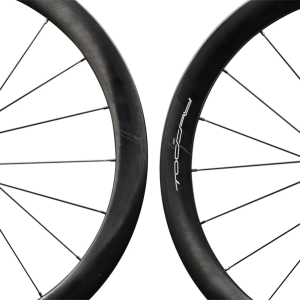 Cycling has quietly become one of the more interesting case studies in premium consumer goods over the past several years. It’s a category that combines genuine engineering complexity, a customer base willing to spend serious money on incremental performance gains, and a supply chain that’s been increasingly reshaped by direct-to-consumer models. For anyone watching where premium hardware businesses are finding growth right now, the wheel and component side of cycling is worth a closer look.
What makes this market particularly interesting from a business perspective is how narrow and specific the value proposition has become. Riders shopping for premium components aren’t buying lifestyle branding the way they might in apparel — they’re buying measurable performance improvements, often backed by published test data, material specifications, and warranty terms they can compare line by line against competitors. That’s a fundamentally different sales dynamic than most premium consumer categories operate under, and it’s created real opportunity for brands willing to compete on engineering transparency rather than pure marketing spend.
Why premium components command real pricing power
Unlike many consumer categories where premium pricing relies heavily on brand perception, cycling components — wheels especially — justify premium pricing through demonstrable engineering differences. A well-built carbon wheelset genuinely performs differently than a budget alternative in measurable ways: weight, aerodynamic efficiency, and durability under tested load conditions. This gives premium brands a more defensible pricing position than categories where the premium is mostly perceptual.
This matters for anyone evaluating the business opportunity here, because it means customer acquisition doesn’t rely purely on marketing spend the way it might in fashion or lifestyle goods. A brand that can demonstrate real engineering value — through published specs, test data, and material transparency — has a genuine competitive tool that doesn’t require outspending larger, more established competitors on brand marketing alone.
The direct-to-consumer margin advantage
Selling directly to riders rather than through multiple layers of retail distribution gives newer brands meaningful room to either undercut legacy pricing or reinvest margin into better materials and testing — often both simultaneously. This structural advantage is a significant part of why newer entrants have been able to compete credibly in a category historically dominated by a handful of long-established manufacturers with deep retail relationships.
What actually drives purchase decisions in this market
Riders shopping for premium wheels or components tend to evaluate purchases with an unusual level of technical scrutiny compared to typical consumer goods. Rim width, weight, hub bearing type, freehub compatibility, and published durability test figures all factor into the decision, often before brand reputation even enters the conversation. This is a genuinely research-driven buying category, which changes what actually works from a business and marketing standpoint.
Brands that lean into this by publishing granular, honest technical detail — rather than relying on vague performance language — tend to convert more effectively with this customer base. It’s a market that rewards transparency as a competitive strategy, not just an ethical nicety.
Warranty terms as a genuine purchase driver
Because premium wheelsets represent a meaningful financial commitment, often well over a thousand dollars, warranty length and clarity function as an actual purchase driver rather than fine print. A clear, multi-year warranty policy signals confidence in product durability and gives risk-averse buyers a concrete reason to choose a newer or less familiar brand over an established name. This has become a common competitive lever among brands trying to build trust quickly in a category where reputation typically took decades to establish.
TOCCAY Cycling as an example of this business model in practice
TOCCAY Cycling illustrates how this positioning plays out for a brand competing in the premium wheelset space. Rather than leaning primarily on lifestyle marketing, the brand structures its product pages around detailed engineering specifics — material grade, rim dimensions, hub bearing type, freehub options — paired with internally documented testing figures for impact resistance and spoke-hole pull strength, while being explicit that these represent internal validation rather than formal third-party certification unless stated otherwise. This kind of transparency-first approach is a recognizable strategy among newer entrants trying to establish credibility quickly against far more established competitors.
The broader premium cycling components market rewards this kind of specificity, and it’s visible across TOCCAY’s product range — multiple depth options, spoke material variants, and both carbon and steel-spoke configurations at different price points, each with its own detailed spec sheet rather than a single generic listing.
Where the growth is actually coming from
A meaningful share of growth in this category is coming from riders upgrading from mid-range alloy setups into their first carbon or premium wheelset — a segment that’s expanded as direct-to-consumer pricing has brought entry points down from what they were even five years ago. This is a particularly attractive customer segment from a business standpoint, since these buyers are often building long-term brand loyalty with their first premium purchase, making repeat business and word-of-mouth referral genuinely significant growth levers.
The role of content and education in customer acquisition
Because this category rewards technical credibility, brands that invest in educational content — compatibility guides, material explainers, testing methodology breakdowns — tend to build stronger organic customer acquisition channels than those relying purely on paid advertising. A rider researching rim depth trade-offs or freehub compatibility before a purchase is, in effect, moving through a self-directed sales funnel that a well-documented blog or resource center can support far more effectively than a traditional ad campaign.
Risks and challenges facing this market
It’s worth noting this isn’t a frictionless growth story. Newer brands face real challenges around building trust without the benefit of decades of reputation, managing warranty and support expectations without the physical presence of a retail network, and differentiating credibly in a market where technical claims are increasingly easy for customers to research and compare. Brands that overstate testing claims or blur internal validation with formal certification risk real reputational damage in a customer base that actively fact-checks these details.
A market rewarding substance over story
The business opportunity in premium cycling components is real, but it’s narrower and more demanding than many premium consumer categories — success here depends on genuine engineering transparency, defensible warranty terms, and a direct-to-consumer structure that can support both competitive pricing and meaningful margin. Brands willing to compete on demonstrated substance rather than marketing story are the ones finding sustainable traction in this space.
For anyone evaluating this market from a business perspective, the takeaway is fairly clear: this is a category where technical credibility functions as the primary competitive moat, and the brands winning long-term customer loyalty are the ones treating spec transparency and honest testing communication as core business strategy, not just product marketing.