

The impact of AI-generated deepfakes on digital evidence in Texas family law cases
Sponsored content. This article was supplied by a third party and Business Money has been paid to publish it.
Key takeaways:
- Understanding the impact of AI-generated deepfakes on family law proceedings in Texas.
- Exploring legal challenges and precedents related to digital evidence.
- Identifying strategies for authenticating and challenging digital evidence in court.
Table of contents:
- Introduction
- Understanding deepfakes
- Deepfakes in family law cases
- Legal challenges in admitting digital evidence
- Texas court precedents on digital evidence
- Authenticating digital evidence
- Strategies for challenging deepfakes
- Conclusion
Artificial intelligence has profoundly changed the landscape of digital technology, introducing both powerful tools and significant risks. Among these risks, AI-generated deepfakes digital content, manipulated to convincingly portray individuals in fabricated scenarios, pose unique challenges for the legal system. The threat is especially concerning in Texas family law, where the authenticity of evidence is paramount. The emergence of deepfakes in these proceedings creates new questions around the integrity and fairness of the judicial process. When parties contend over sensitive issues such as child custody or property division, the use of deepfakes could have serious legal repercussions. For more on the role of fake AI photos in divorce cases, recent events highlight just how easily misinformation can enter courtrooms.
Judges, attorneys, and litigants now must adapt quickly to an environment where digital evidence can be fabricated with little more than commercially available software. The authenticity of voice recordings, images, and videos, once considered reliable evidence, is now regularly called into question. Examining the intersection of deepfakes and legal evidence is crucial for any party involved in a Texas family law case.
These concerns extend beyond Texas and reflect a broader national struggle with digital truth. The repercussions go far beyond the courtroom: families, relationships, and even children’s best interests can be irreparably impacted by misleading synthetic media. Addressing the threat of deepfakes in family law cases is not only important for fair legal outcomes but also critical for maintaining public trust in the judicial process.
According to a report by The New York Times, legal systems across the United States are rapidly reconsidering how to weigh digital evidence, especially as deepfake technology becomes more sophisticated and accessible to the public.
Understanding deepfakes
Deepfakes are synthetic media created using powerful machine learning algorithms that analyze and reconstruct likenesses from extensive data sets. Sophisticated software makes it possible to create videos and audio recordings so lifelike that even experts sometimes struggle to distinguish them from genuine content. This capability makes deepfakes incredibly dangerous in legal contexts, since they can be tailored to depict situations that never actually occurred.
The proliferation of apps and open-source tools capable of generating deepfakes means that these fabricated media are not just the province of hackers or tech-savvy criminals. Anyone with a smartphone and basic know-how can produce manipulated content, increasing both the risk of malicious use and the burden on the courts to scrutinize digital evidence carefully.
Deepfakes in family law cases
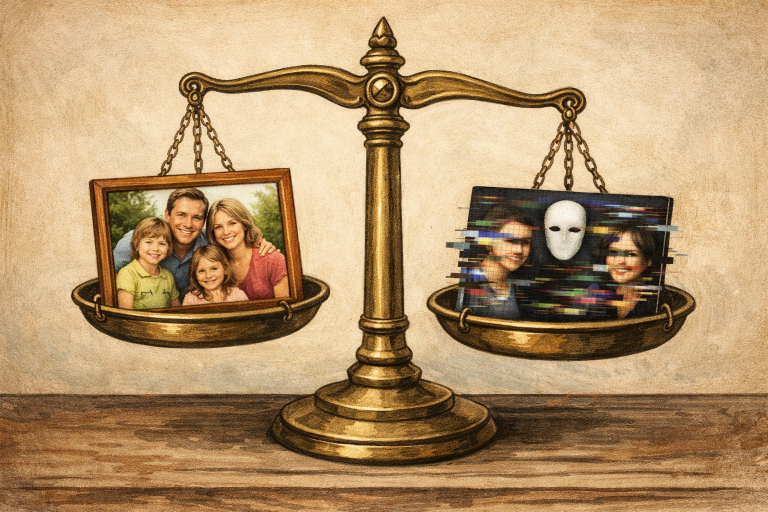
Family law cases often hinge on evidence such as text messages, photos, social media posts, or video footage. Deepfakes present new opportunities for litigants to introduce falsified “proof” of infidelity, abuse, neglect, or reckless behavior. In high-stakes disputes involving child custody or asset distribution, a convincing deepfake can sway the court’s decision in favor of the party who fabricated the evidence.
For instance, a spouse engaged in a contentious divorce could submit a deepfake video purporting to show the other parent acting inappropriately around their children. Judges may be forced to evaluate the authenticity of evidence that looks and sounds genuine, potentially leading to wrongful rulings, traumas, or miscarriages of justice if fabricated evidence goes undetected.
Legal challenges in admitting digital evidence
Texas courts, like those in many other states, must determine how to handle the risk that incoming evidence has been manipulated. The procedural rules governing evidence, such as Texas Rules of Evidence Rule 901, require that proffered evidence be authenticated—that is, the party presenting it must demonstrate that it is what they claim it to be.
Deepfakes challenge this process. They require more from judges and attorneys who must now distinguish genuine digital evidence from expertly crafted forgeries. In many cases, courts will require expert testimony or sophisticated technical analysis far more than is typically needed for other types of documentary evidence. This emerging area of law is still developing, and courts are working to balance the needs for justice, efficiency, and accuracy in increasingly complex digital landscapes.
Texas court precedents on digital evidence
Texas courts have developed a growing body of case law on digital evidence, even if specific rulings on deepfakes are still emerging. In Ortego v. State, the court ruled that evidence obtained from a spouse’s phone was admissible when there was prior written consent given for inspection under certain circumstances. This precedent emphasizes the importance of clear consent in the collection and submission of digital evidence and demonstrates the complexity of adjudicating cases involving electronic materials.
Authenticating digital evidence
Authentication refers to the process of proving that digital media is what the proponent claims. Texas courts frequently rely on a combination of metadata analysis, supporting documentation, witness testimony, and circumstantial evidence. In Henderson v. State, Texas courts found that records from an Instagram account could be authenticated through circumstantial evidence that tied the account activity to the defendant. This comprehensive approach reflects the growing challenge of separating authentic evidence from fabrications and the value of combining technical and factual sources for authentication.
Strategies for challenging deepfakes
Expert analysis and testimony
Legal teams can consult forensic experts who specialize in analyzing digital content for signs of tampering. These analysts can uncover subtle anomalies, inconsistencies, or artifacts indicating manipulation that may not be visible to the untrained eye.
Metadata and technical review
Scrutinizing metadata can uncover anomalies such as unusual creation dates or editing histories. Comparing metadata to witness statements or contextual facts can reveal discrepancies that raise doubts about a file’s authenticity.
Robust documentation and cross-examination
Courts may require clear documentation of the chain of custody to show how digital evidence was collected, stored, and transferred. Lawyers can also use cross-examination to challenge the reliability of both the evidence and the methods by which it was obtained.
Technological detection tools
Technologies that can detect common signs of deepfakes or digital manipulations, such as inconsistencies in lighting, facial movements, or voice modulation, are now being developed and integrated into forensic analysis. Pew Research Center underscores the increasing role of AI-driven detection tools in identifying and flagging fake media.
Conclusion
The rapid advancement of AI-generated deepfakes is reshaping how evidence is scrutinized in Texas family law cases. While the risks to the integrity of judicial proceedings are significant, there are proven strategies and developing technologies that courts and attorneys can rely on to safeguard the legal process. Remaining vigilant and informed about the latest authentication practices will be key to ensuring that the outcomes of family law disputes reflect truth rather than technological deception.