

The value of food logistics in modern businesses
Sponsored content. This article was supplied by a third party and Business Money has been paid to publish it.
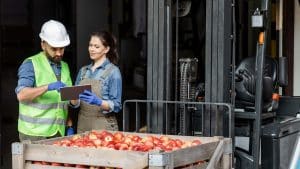
Management of movement of products in modern warehouse, mobile app and modern tech for work and loading. Friendly young female in uniform and gloves shows tablet to guy worker in helmet near forklift
Food logistics supports many modern businesses that rely on steady product movement, controlled storage conditions, and reliable distribution networks. The process involves handling goods that need consistent temperatures, precise timing, and compliance with food safety regulations. Companies that manage these tasks effectively help reduce waste, limit delays, and maintain product quality from start to finish. Clear systems and steady coordination help businesses protect their operations and keep products stable throughout each stage.
The expanding role of food logistics
Food logistics covers a wide range of activities that influence how products move across the supply chain. Many businesses depend on structured workflows that support transportation, storage, and handling. Product stability relies on predictable conditions, and the methods behind these activities influence freshness, availability, and cost control.
Temperature-controlled products need careful oversight from their point of origin to the final delivery site. Teams must handle packaging, routing, and storage while meeting labeling and documentation requirements. Each activity affects shelf life, so precise coordination matters in every step of the process. Many companies rely on specialized carriers that manage refrigeration systems, refrigerated trucks, and other equipment built for perishable goods.
Storage practices, technology, and operational support
Cold storage facilities play a central role in food logistics. Their layout, equipment, and temperature management systems give businesses a controlled setting that keeps goods stable. Operators focus on humidity levels, handling methods, and rotation practices. Storage performance can influence product quality, customer satisfaction, and long-term operating costs.
A growing number of facilities use wireless sensors or other monitoring devices that track temperature shifts inside storage units. These tools help teams react to developing issues before the goods lose quality. The capacity to track changes in real time supports compliance efforts and helps reduce disposal rates. Many companies work with partners such as Effective Logistics when they need structured support for food distribution and controlled storage environments.
Operational planning becomes even more significant when goods move through international pathways. Port operations affect timing, especially in regions where traffic increases during seasonal peaks. Even a short port disruption can change delivery schedules or limit access to ocean freight services. Teams that handle international shipments must account for documentation, export regulations, and handling rules in each destination. These tasks require careful coordination and steady oversight, especially when demand surges during a big day in the retail calendar.
Transportation and distribution requirements
Food logistics depends on carriers that can transport products through local and interstate routes while keeping temperatures stable. Refrigerated trucks support this need. Their insulated walls, cooling units, and airflow systems help businesses protect products over long distances. Drivers follow strict procedures during loading, unloading, and inspection. Each action influences product quality because perishable goods respond quickly to temperature changes.
Transport providers also handle routing and schedule planning. Traffic patterns, distance, and delivery windows affect timing. Teams consider the number of stops, driver availability, and equipment capacity. Many businesses use flexible distribution strategies that respond to changes in demand or supply conditions. This type of planning helps companies reduce delays when weather shifts, mechanical issues, or staffing shortages occur. Local knowledge plays a major part in keeping distribution activities steady, especially during periods of high demand.
How food logistics supports business stability
World map with logistic network and supermarket on background
Food logistics affects several areas of business performance. Companies that manage these processes effectively often see improvements in product freshness, waste reduction, and inventory stability. Coordinated storage and transportation help reduce losses caused by temperature fluctuations or handling errors. This type of structure supports consistent product quality.
Guided systems also assist companies when they expand into new regions or markets. Reliable logistics partners give businesses more confidence when transporting perishable items across longer routes. Access to cold storage, qualified carriers, and monitoring technology reduces common risks associated with product spoilage. Some operators develop innovative solutions that integrate digital tools with physical infrastructure. These changes help strengthen decision-making and support growth in a competitive environment.
Steady logistics performance plays a significant part in customer retention. Retailers and food service operators rely on accurate deliveries to maintain their offerings. If products arrive late or damaged, the disruption can affect sales and operations. Reliable handling methods and storage practices help keep products in consistent condition across various locations. Over time, these practices support stronger relationships with suppliers and buyers.
In closing
Food logistics provides structure to many modern business operations. Companies depend on precise storage conditions, reliable transportation, and accurate documentation to keep perishable goods stable throughout the supply chain. Attention to temperature, handling, and compliance helps reduce waste and protect product quality. Businesses that work with knowledgeable logistics partners gain access to controlled storage, trained staff, and transportation networks that support long-term operational stability.