

Understanding crypto market liquidity and why it matters to investors
Sponsored content. This article was supplied by a third party and Business Money has been paid to publish it.
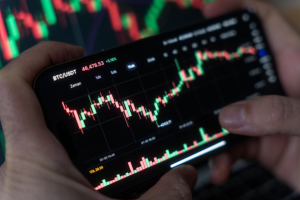 Crypto markets can move quickly, but price movement is only part of the picture. Another factor that can have a major effect on trading is liquidity. An asset may have a visible market price, but that does not necessarily mean a large amount of it can be bought or sold at that price.
Liquidity describes how easily an asset can be bought or sold without causing a significant change in its price. In financial markets, liquid assets generally have many buyers and sellers, active trading and relatively narrow differences between the prices at which people are willing to buy and sell. Crypto markets have these characteristics too, although liquidity can vary significantly between assets, exchanges and trading pairs.
For investors, understanding liquidity can provide useful context when looking beyond a simple price chart.
What crypto market liquidity actually means
Imagine an investor wants to buy a small amount of Bitcoin. If there are plenty of sellers offering Bitcoin close to the current market price, the order can generally be completed without moving the price very much.
Now consider a less actively traded digital asset. There may be fewer orders available near the current market price. A larger purchase could then consume the available orders at one price level and move through several additional price levels before the entire order is filled.
This is one reason the displayed price is not always the same as the final price of a trade.
Liquidity is therefore not simply about how much an asset is worth. It is about how much buying and selling activity is available around the current market price.
Why liquidity matters to investors
Liquidity matters because it can affect the cost and ease of entering or leaving a position. In a liquid market, investors generally have more counterparties available when they want to trade. This can make execution more predictable, particularly when market conditions are relatively stable.
In a less liquid market, the situation can be different. A relatively large order may have a greater effect on the market price, while investors may face wider spreads or more slippage.
This becomes particularly relevant during periods of rapid market movement. When prices are changing quickly, available orders can disappear or be replaced at different levels. As a result, the liquidity visible at one moment may not remain available a few seconds later.
Investors tracking the bitcoin price, for example, should therefore consider more than the latest quoted figure. Trading activity, market depth and the availability of buyers and sellers can all influence how easily a position can be entered or exited.
The relationship between trading volume and liquidity
Trading volume is often used as a quick indicator of market activity, but volume and liquidity are not exactly the same thing.
High trading volume means that a large amount of an asset has changed hands over a particular period. Liquidity, meanwhile, concerns how much trading can take place without significantly affecting the market price.
An asset can have substantial reported volume while liquidity remains fragmented across different exchanges and trading pairs. This distinction is important because investors should not assume that a high volume figure automatically means every trade will receive efficient execution.
Bid-ask spreads provide another clue
The bid-ask spread is the difference between the highest price a buyer is currently willing to pay and the lowest price a seller is willing to accept.
A narrower spread generally indicates that buyers and sellers are relatively close together. A wider spread can indicate thinner liquidity or less active trading.
For example, if an asset has a bid of $99.90 and an ask of $100.10, the spread is $0.20. If another asset has a bid of $98 and an ask of $102, the difference is much larger.
The spread is only one measure, but it can help investors understand the trading conditions surrounding an asset rather than looking only at its headline price.
Understanding slippage
Slippage occurs when a trade executes at a different price from the one an investor expected. It can happen when markets move quickly, when an order is large relative to available liquidity, or when there are not enough orders close to the desired price.
For example, suppose an investor submits a market order expecting to buy an asset at $100. If there are not enough sellers at $100, the order may continue filling at $100.20, $100.50 or higher. The final average execution price could therefore be above the price originally displayed.
The potential for slippage is one reason liquidity matters when investors are deciding how to execute larger trades.
Market depth and order books
Another useful way to examine liquidity is market depth.
An order book contains buy and sell orders at different price levels. A market with substantial orders close to the current price generally has greater depth than one where only small amounts are available.
This becomes especially important for larger trades. A small order may have little impact on a deep market, while a large order could move through several levels of the order book.
Market depth can therefore provide information that a simple 24-hour volume figure may not show.
Why crypto liquidity can change quickly
Crypto markets operate around the clock, and liquidity can change as trading activity moves between regions and platforms. Major news, sharp price movements, regulatory developments and changes in investor sentiment can also affect the number of active buyers and sellers.
During periods of heightened volatility, investors may simultaneously attempt to buy or sell an asset. At the same time, market makers and other liquidity providers may adjust their positions or quoted prices.
This means liquidity should be viewed as a changing market condition rather than a permanent characteristic of an asset.
Liquidity also differs between assets
Not every cryptocurrency has the same level of market liquidity.
Large, widely traded assets such as Bitcoin and Ethereum typically have substantially more trading activity than smaller digital assets. However, even within the same asset, liquidity can differ depending on the exchange, trading pair and market conditions.
This means an investor should consider where and how an asset is being traded rather than treating liquidity as a fixed characteristic.
The same cryptocurrency can have different spreads, order-book depth and trading activity across different venues.
What investors can look at
Investors do not need to rely on a single metric when assessing liquidity. Several indicators can provide a broader picture.
Trading volume can show how active a market has been over a particular period. The bid-ask spread can provide an indication of the gap between buyers and sellers. Order-book depth can show how much buying and selling interest exists around the current price. Slippage can help reveal how much the actual execution price differs from expectations.
Looking at these factors together can provide a more useful picture than focusing solely on market capitalisation or the latest quoted price.
Liquidity and risk management
Liquidity should also be considered as part of broader risk management.
An investor may be comfortable with the potential price volatility of a particular digital asset but overlook the possibility that a position could be difficult to exit efficiently during stressed market conditions.
This does not mean that lower-liquidity assets are automatically unsuitable. It means that liquidity is another factor to understand when considering position size, order type and trading conditions.
For larger orders, splitting a transaction or using an order type that provides greater control over execution may sometimes help reduce price impact. The appropriate approach depends on the asset, market conditions and the investor’s objectives.
The bigger picture
Crypto market liquidity is easy to overlook because price and market capitalisation receive much of the attention. Yet liquidity can have a direct effect on how efficiently investors can buy and sell digital assets.
Trading volume, bid-ask spreads, market depth and slippage each provide a different perspective on market conditions. None of them tells the complete story on its own.
As crypto markets continue to develop, understanding liquidity can help investors interpret price movements more carefully and recognise the difference between the price shown on a screen and the price at which a trade can actually be executed.
For anyone participating in digital-asset markets, liquidity is therefore not just a technical trading concept. It is an important part of understanding how the market works.