

What Ohio business owners need to know before filing a property insurance claim
Sponsored content. This article was supplied by a third party and Business Money has been paid to publish it.
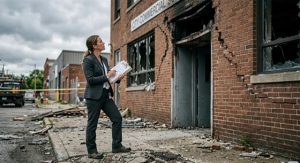 Ohio’s insurance market has tightened considerably over the past few years. Average homeowners insurance premiums rose 36.4% between 2019 and 2024, according to a January 2025 S&P Global analysis – yet rising premiums don’t translate into faster or larger payouts when you actually need to file a claim. For business owners and property investors, that gap matters a lot.
The adjuster who shows up after a storm or fire isn’t working for you. They work for the insurance company. Their job is to assess the loss and process the claim, but “process” doesn’t always mean “maximize.” Most Ohio property owners don’t find this out until after they’ve already accepted a settlement.
This guide walks through what a public adjuster actually does, where Ohio claims tend to go sideways, and how to make a clear-eyed financial decision about whether hiring one makes sense for your situation.
What a public adjuster actually does
 A public adjuster is a licensed claims professional who works exclusively for the policyholder – not the insurer. Where a company adjuster’s job is to evaluate your loss within the insurer’s guidelines, a public adjuster’s job is to make sure your claim is accurate, fully documented, and negotiated to a fair settlement.
If you’re dealing with fire damage, water intrusion, storm loss, or any complex property claim, working with a licensed Ohio public adjuster means having someone with construction knowledge and claims experience building the case on your side. They handle the damage assessment, prepare the claim documentation, and negotiate directly with the insurer – tasks most business owners aren’t equipped to do while also running a business.
According to the National Association of Public Insurance Adjusters (NAPIA), public adjusters are employed exclusively by policyholders and bring specialized expertise in policy language, damage valuation, and claims negotiation. In Ohio, public adjusters must hold a state license under Ohio Revised Code § 3951.01, which sets out the legal definition and licensing requirements for anyone representing policyholders in this capacity. If someone claims to be a public adjuster but can’t verify their Ohio license, that’s a clear warning sign.
Why Ohio property claims are more contested than most owners expect
Ohio’s weather risk profile is a real factor here. Hail, windstorms, frozen pipe bursts, and flash flooding from spring snowmelt all generate significant property damage every year. Insurers have been adjusting their pricing accordingly. Farmers Insurance filed for a 22.4% rate increase in Ohio in mid-2024, affecting approximately 115,700 policyholders according to Ohio Department of Insurance filings. Rates are rising because losses are real – and so is the pressure on insurers to manage payouts.
The settlement gap in Ohio is substantial. Noble PA Group published data from a sample of 78 Ohio claims handled between 2020 and 2024. Average initial insurer offer: $74,258. Average final settlement after public adjuster representation: $244,662. That’s not a rounding error – that’s a difference that would affect most businesses’ ability to rebuild and reopen.
The Ohio Department of Insurance received 4,480 complaints against property and casualty insurers in 2023. Settlement disputes accounted for 23% of those complaints, and homeowner claims made up 47% of the total, per Ohio DOI data compiled by Noble PA Group. These aren’t outlier situations. They’re a consistent pattern of disputes between policyholders and insurers over what a loss is actually worth.
For business owners, understanding this environment is part of managing your business’s financial risks effectively – the same way you’d think about liability exposure or contract terms before they become a problem.
The claims process pitfalls that cost business owners money
 Most businesses don’t lose money on claims through fraud or bad faith – they lose it through missed deadlines, incomplete documentation, and misread policy terms. The most common one is the Proof of Loss deadline.
In Ohio, policyholders typically have 60 days from the date of loss (or from when the insurer requests it) to file a completed Proof of Loss document. Missing this deadline can invalidate the claim entirely. This is one of the first things a public adjuster checks – and one of the last things most business owners know to look for.
The second major cost is the initial offer. Insurance companies routinely make opening settlement offers well below what a claim is actually worth. This is standard industry practice, not necessarily a sign of bad faith. The expectation is that some percentage of policyholders will accept without questioning. A 2010 study by the Florida Legislature’s Office of Program Policy Analysis and Government Accountability (OPPAGA Report No. 10-06) found that policyholders with public adjuster representation received catastrophe claim settlements averaging 747% higher than those without representation – a figure that illustrates the size of the gap that routinely exists between first offers and final outcomes. That data comes from Florida, but the underlying dynamic applies across the country.
Beyond those two issues, there are coverage categories that get missed even in legitimate claims: structural code upgrade requirements triggered by the loss, contents losses that aren’t fully inventoried, and business interruption coverage that goes unclaimed because owners don’t realize it applies. These aren’t obscure clauses – they’re standard parts of most commercial policies that require specific documentation to activate.
Protecting your business against unexpected financial setbacks starts with knowing what your policy actually covers and what it requires you to do when something goes wrong.
When hiring a public adjuster makes financial sense
The math is clearest on large or complex claims. Any loss over $10,000, a disputed or denied claim, commercial property with multiple damage categories, or a situation involving business interruption losses – these are cases where professional representation is almost always worth the cost.
Public adjusters typically work on contingency: 10-20% of the final settlement, with no upfront fee. Using the Noble PA Group Ohio figures, a claim that moves from a $74,000 initial offer to a $244,000 final settlement leaves the policyholder with around $207,000 after a 15% fee – compared to $74,000 if they’d accepted the first offer. The fee pays for itself by a wide margin.
There are situations where hiring one doesn’t make sense. Very small claims where the PA fee would eat most or all of the incremental gain aren’t worth the effort for anyone. Straightforward, well-documented claims on simple losses with responsive insurers can often move through the process without help. The question is always whether the likely settlement gap is large enough to justify the fee – and on commercial property claims, it usually is.
One thing worth knowing: per the National Association of Insurance Commissioners, insurers cannot cancel your policy solely because you hired a public adjuster. If an insurer suggests otherwise, that’s worth reporting.
For business owners thinking about their overall financial position, this connects directly to building financial resilience for uncertain times – not just reacting to problems when they happen, but knowing your options before a loss occurs.
How to find a licensed public adjuster in Ohio
Start with the Ohio Department of Insurance license lookup. Any legitimate public adjuster working in Ohio will hold a state license you can verify before signing anything. The Ohio DOI Complaint Center is also the place to go if you have issues with either an insurer or an adjuster.
Beyond license verification, look for membership in NAPIA or credentials like the Certified Professional Public Adjuster (CPPA) or Senior Professional Public Adjuster (SPPA) designations. These aren’t legally required, but they indicate someone who takes the work seriously enough to pursue formal certification.
Get the fee agreement in writing before you sign anything. The percentage, the scope of work, and any conditions should all be spelled out clearly. Ask specifically about their experience with your type of damage – fire claims have different documentation requirements than water damage or storm losses, and experience with your specific situation matters.
A useful screening question: ask them to show you documented outcomes from Ohio claims they’ve handled. A reputable public adjuster will have records they can share. Someone who deflects that question is worth being cautious about.
The bottom line
Ohio’s insurance environment isn’t getting easier. Rates are up, claim disputes are common, and initial settlement offers frequently reflect what the insurer wants to pay rather than what the policy actually covers. That’s not cynicism – it’s what the complaint and settlement data shows.
A licensed public adjuster is a financial specialist for the claims process. Hiring one on a large or complex loss isn’t a sign that something went wrong – it’s the same logic as hiring an accountant for a complicated tax situation or an attorney before signing a major contract. The person across the table has professional expertise. Having someone with equivalent expertise on your side is just sensible.
If a claim is worth filing, it’s worth filing correctly.