

Why bank transfers still take time in a digital banking world
Sponsored content. This article was supplied by a third party and Business Money has been paid to publish it.
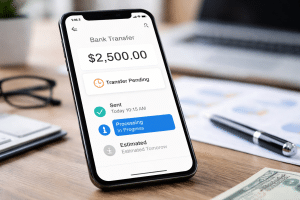
Bank transfers may appear instant, but underlying systems process transactions in structured timeframes.
Bank transfers remain a core part of how money moves through the financial system, yet processing delays continue to create confusion for both individuals and businesses.
As expectations around instant payments increase, many assume that all transfers should complete immediately. In reality, the infrastructure behind these transactions still operates within structured processes designed to prioritize accuracy, security, and system stability.
In practical terms, this means that both individuals and businesses must plan around processing timelines rather than assuming immediate access to funds.
For businesses, this can have direct implications. Payment timing affects cash flow, supplier relationships, and operational planning, particularly when funds do not arrive as quickly as expected.
Questions around how long bank transfers take remain common, especially as digital banking platforms continue to promote speed and convenience. In practice, transfer times depend on factors such as the type of payment, the institutions involved, and when the transaction is initiated. Requests made outside standard processing windows are often delayed until the next working day. More details can be found in this guide, which explains how long bank transfers take.
ACH transfers, widely used for routine payments, continue to operate in batch processing cycles rather than real time, which can affect how quickly funds are received in day-to-day transactions. Understanding how ACH transfers work helps explain why these payments typically take one to three working days to complete, even when initiated electronically.
Security remains another critical factor. Financial institutions monitor transactions for unusual activity, particularly when funds are transferred between new or previously unused accounts. While these checks can introduce delays, they are essential for maintaining trust in the system. These processes also align with broader standards set by organizations such as the Federal Deposit Insurance Corporation, which help ensure stability and consumer protection across the banking system.
Transfers between different banks can introduce further complexity. Even where both institutions support digital banking, variations in internal systems and processing schedules can affect how quickly funds are received.
Although real-time payment systems are expanding, they are not yet universally adopted. Traditional transfer methods remain widely used and continue to operate within established timelines.
As digital banking continues to evolve, the gap between user expectations and system capabilities remains a challenge for financial institutions. While speed is improving, the underlying infrastructure still prioritizes reliability, security, and operational control over instant execution, requiring users and businesses to adapt to how these systems function in practice.