

Why employee psychological safety drives productivity more than perks ever could
Sponsored content. This article was supplied by a third party and Business Money has been paid to publish it.
Many organisations invest heavily in their workplace perks to attract top talent and boost productivity. However, surface-level benefits such as free lunches, discounted gym memberships, and wellness apps won’t drive productivity unless they’re accompanied by psychological safety.
Recognising this, more forward-thinking organisations in 2026 are shifting their focus from perks alone to establishing psychologically safe workplaces that drive productivity.
To understand why this shift matters, this article will explore what psychological safety means in the modern workplace, how it drives productivity more than perks, and what practical steps organisations can take to strengthen it.
What is psychological safety?
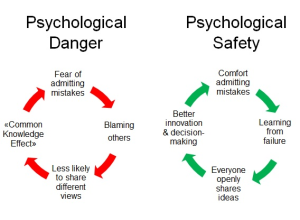
Image Source: Touch Screen Talent
Psychological safety is a workplace culture where employees feel comfortable speaking up, sharing ideas, taking ownership of their work, asking questions, and admitting their mistakes without fear of negative consequences, embarrassment, or judgment.
For example, a junior employee feels confident enough to speak up during a team meeting after noticing an error. In a psychologically safe environment, the leader would listen and thank them for raising it before working as a team to make corrections.
With this level of communication, trust, and respect in the workplace, employees can focus on doing their best work and contributing to better business outcomes, rather than protecting themselves. When psychological safety is absent, employees become quiet, avoid risky questions, and minimise their creativity, which impacts productivity and performance.
Why psychological safety drives productivity more than perks
It’s no secret that psychological safety directly impacts workplace productivity by reducing friction.
When mistakes are treated as opportunities rather than failures, employees learn more. When employees aren’t avoiding risks, work is more creative and innovative. When employees aren’t afraid to speak up, teams collaborate better.
In contrast, even the most generous organisational perks won’t drive productivity if employees feel anxious, unheard, or undervalued.
Free lunches won’t help an employee who has hidden a costly mistake from their manager. Discounted gym memberships won’t give an employee who feels unable to speak up in meetings more confidence. Wellness apps won’t have an impact if employees fear being judged for admitting they are struggling mentally.
It’s important for organisations to offer their employees some perks, especially when trying to attract and retain top talent. However, when psychological safety is absent, productivity will still suffer regardless of the perks being enjoyed.
How to strengthen psychological safety
Whilst more organisations invest in their workplace perks, we’ve witnessed a 25% decline in people who feel able to bring their whole self to work over the past five years, likely due to the environment.
In 2026, organisations that want to thrive will focus on strengthening psychological safety in the workplace, as it has proven to drive productivity. Here are two key ways to strengthen psychological safety:
With training
Managers are the biggest drivers of psychological safety, as they shape employees’ day-to-day experience more than anyone else. Their behaviours and boundaries set the tone for what is and isn’t acceptable within a team.
Organisations must ensure that those in managerial or leadership roles are trained to build trusting, open, and judgement-free workplaces.
Managers can create psychologically safe environments by welcoming new ideas, encouraging open communication and active listening, responding constructively to mistakes, and avoiding micromanagement.
With tools
While psychological safety is deeply rooted in culture and management, AI-powered HR software can also play a key role in measuring and improving it.
Platforms, such as Access PeopleXD Evo, allow organisations to track real-time data on engagement, absenteeism, feedback, and performance trends. This data enables proactive intervention, rather than waiting for productivity to decrease or employees to burn out.
For example, organisations can use a sudden spike in absenteeism data to signal low psychological safety within a team.
Another key advantage of using an AI-powered platform is its ability to help managers track productivity in a non-intrusive way using analytics and automated reporting. This builds trust instead of control, which is crucial for psychological safety.
Ready to drive productivity in 2026?
Perks are very likely to attract employees, especially those that improve work-life balance and wellbeing. However, a positive, psychologically safe workplace is what encourages employees to contribute, innovate, and perform at their best.
Organisations that thrive in 2026 will go beyond offering perks and instead focus on building psychologically safe environments.