

Why manufacturing facilities are switching to digital safety boards
Sponsored content. This article was supplied by a third party and Business Money has been paid to publish it.
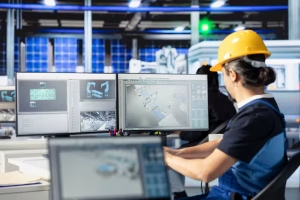
Freepik photo by: @dcstudio
Here’s something most manufacturing executives know but don’t talk about enough: workplace injuries are expensive. According to the National Safety Council, work-related injuries drained $176.5 billion from employers in 2023. That’s $1,080 per worker. For manufacturers working with tight profit margins, these aren’t numbers you can ignore.
The problem with how most facilities handle safety communication? It hasn’t changed in decades. Printed posters everyone walks past. Safety manuals gathering dust. And when there’s a critical update about a new hazard or procedure change, getting that information to everyone becomes a pain. That’s why manufacturers are installing safety boards for industrial & manufacturing systems that deliver information where and when employees need it. These digital displays are changing how facilities handle safety protocols, emergency procedures, and compliance.
Why traditional safety methods fall short
Think about how traditional safety signage actually works. Every update means printing new materials, posting them in multiple locations, and hoping people notice. It’s inefficient. Digital systems flip this model. Safety managers push updates to every screen at once. Weather alert? Done in seconds. Equipment malfunction? Instant. New procedure before the next shift? No problem. When hazards evolve quickly or regulations change, being able to respond fast matters.
Addressing the realities of production floors
Anyone who’s spent time on a manufacturing floor knows the challenges. It’s loud, workers are wearing protective gear that blocks what they can see, and what the morning shift needs to know might be completely different from the night shift. Digital signage handles this better than static signs ever could. Bold visuals cut through noise, smart placement puts information where people actually look, and scheduling shows the right content to the right shift. Screens near high-risk equipment can display specific safety procedures for that machine, cutting down on accidents from improper training.
The compliance and cost equation
Here’s where things get financially interesting. OSHA tracks workplace violations obsessively, and communication failures consistently rank among their most cited issues. Digital safety systems help you prove compliance by logging everything: what information was displayed, when, and where. That documentation becomes valuable during inspections.
The ROI calculations make sense. The National Safety Council found that good safety programs return four to six dollars per dollar invested. Digital signage helps because your safety personnel spend less time distributing information, and message retention goes up. Dynamic content works better than static signs. Video demonstrations beat text for complex procedures.
Beyond basic messaging
Modern digital signage connects with your other facility systems. You can display production metrics alongside safety reminders, creating unified communication instead of scattered information. When quality issues pop up from safety shortcuts, finding the connection becomes simple. Some manufacturers use screens to recognize safety achievements and build up the culture they want.
Getting started without massive investment
You don’t need to spend a fortune to get started. Cloud-based platforms have brought costs down and eliminated the need for on-site servers. Most manufacturers start small, putting screens in high-traffic areas first, measuring results, then expanding. That flexibility matters if you’ve got multiple facilities or plan to grow.
Digital transformation in manufacturing usually focuses on production efficiency and automation. But safety communication deserves the same attention. The technology’s here to reduce injuries, improve compliance, and lower costs at the same time. Manufacturers still reliant on printouts and bulletin boards are at a disadvantage.
The question isn’t whether digital safety signage works. Facilities using these systems show real improvements in incident rates and compliance scores. The question is whether you can justify sticking with 1990s methods when better options deliver clear returns.