

Why PTFE foil is becoming a critical material across industries
Sponsored content. This article was supplied by a third party and Business Money has been paid to publish it.
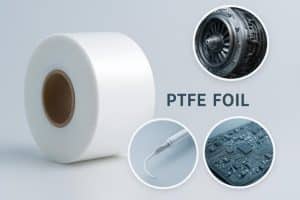 PTFE foil is becoming a critical material across many industries because it offers a rare mix of properties that no other single material can match: almost complete resistance to chemicals, a very wide working temperature range, and the lowest friction of any known solid.
As factories and technical systems push higher limits of heat, speed, and aggressive chemicals, PTFE foil works as a top-level protective barrier and performance booster, helping machines run longer, stay cleaner, and work more efficiently in conditions that quickly damage normal plastics.
From sterile pharmaceutical labs to the high-vacuum conditions of aerospace engineering, this material has moved from being a niche “miracle plastic” to a standard industrial basic.
As we move deeper into 2026, demand for high-performance PTFE foil keeps rising, driven by the need for durable, reliable parts in the semiconductor, renewable energy, and automotive sectors. It is no longer just about “not sticking”; it is about making the next wave of technology possible.
What is PTFE foil and why is it in demand?
What makes PTFE foil unique compared to other materials?
On the molecular level, PTFE (Polytetrafluoroethylene) is a man-made fluoropolymer made only from carbon and fluorine atoms. The carbon-fluorine bond is one of the strongest in organic chemistry, giving PTFE its famous “shield” against outside influences.
Where other plastics may melt, bend, or dissolve under strong solvents or high heat, PTFE stays stable and unchanged. This strong structure makes it possible to produce very thin, flexible foils that can be wrapped, bonded, or used as linings on many different surfaces.
Unlike common plastic films, PTFE foil does not age or break down under UV light or weather, so it can last an extremely long time in outdoor and industrial use. Its non-reactive nature means it will not contaminate sensitive fluids in medical or food-processing systems, a quality that is becoming more important as global safety rules grow tighter.
This “install it and forget it” reliability makes it far more attractive than cheaper, less durable plastics.
Key properties that drive adoption across industries
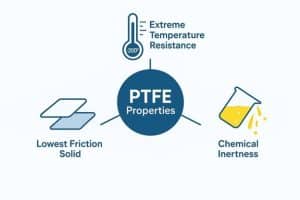 The main reason PTFE is gaining ground is its remarkable temperature resistance, working well from -200°C to +260°C. This means it can be used both in very cold cryogenic systems and in high-heat industrial ovens. Its friction is so low that people often compare it to two pieces of melting ice sliding over each other.
This extreme “slipperiness” is a major advantage in any industry with moving parts, because it cuts energy use and mechanical wear.
PTFE foil is also an excellent electrical insulator with high dielectric strength. As electronics get more complex and high-frequency 5G networks spread, materials that can stop electrical leakage while handling high heat loads are in high demand. Combined with its total resistance to nearly all industrial chemicals and acids, PTFE offers a material profile that no other synthetic resin can match today.
To leverage these properties in demanding environments, many companies rely on the specialized production and maintenance services provided by https://eder-belts.com/, ensuring that cutting-edge materials are perfectly adapted to specific industrial needs.
Where is PTFE foil used? Major industries and their applications
Electronics and semiconductors: Insulation and purity demands
 In semiconductor production, even a tiny particle of contamination can cause large yield losses. PTFE foil is widely used in chip factories because it is extremely pure and chemically inert. It lines tanks and pipes that carry strong etching chemicals, keeping aggressive substances from contaminating the very clean conditions needed for modern microchips.
Outside chip plants, PTFE is a key material in the wider electronics industry. It appears in high-frequency circuit boards and as insulation in high-performance cables. With the global PTFE Copper Clad Laminate (CCL) market expected to reach about $16.6 billion by 2033, it is clear that our digital future-covering 5G networks and IoT devices-relies heavily on PTFE-based materials.
Chemical processing: Corrosive environments
The chemical industry is one of the harshest settings for any material. PTFE foil is used as a lining for pipes, valves, and storage tanks that hold aggressive solvents and acids. Because it does not melt or break down after long-term exposure to these chemicals, it offers safety and long service life, helping to prevent toxic leaks and costly environmental incidents.
By blocking leaks and corrosion in industrial pipelines, PTFE foil lowers the risk of equipment failure. It allows chemical plants to run at higher temperatures and pressures, often improving reaction efficiency, raising output, and cutting operating costs over time.
Food and beverage: Non-toxic and non-stick surfaces
 Hygiene is the top concern in the food industry. PTFE foil is FDA-approved, non-toxic, and non-contaminating, making it ideal for equipment that touches food directly. From commercial baking trays to the inner linings of coffee makers and waffle irons, its non-stick surface keeps food from burning on or sticking, which makes cleaning faster and more effective.
One case study from a food-processing plant reported a 40% drop in downtime after switching to PTFE components. Easier cleaning means less time on maintenance and more time producing goods. The non-stick surface also keeps product flow smooth and helps avoid the clogging that often affects food packaging lines.
Automotive: Friction reduction and sealing
The automotive industry uses PTFE foil to improve fuel economy and extend engine life. Applying PTFE-based coatings to engine parts has led to friction cuts of up to 30%, which can mean fuel savings of around 15%. PTFE appears in shaft seals, valve stem seals, and gaskets to provide leak-free performance under the high speeds and temperatures of modern internal combustion and electric vehicle (EV) motors.
PTFE’s resistance to aggressive chemicals in fuels and lubricants also makes it suitable for fuel hose linings. It is present in external parts too, such as wiper blades and windshield treatments, where its water-repellent surface keeps glass clear in heavy rain and supports overall vehicle safety and reliability.
Medical and pharmaceutical: Biocompatibility and sterility
In medicine, PTFE is valued for being biocompatible. It is chemically inert and does not trigger an immune reaction, which is why it is used in cardiovascular grafts, heart patches, and ligament replacements. PTFE foil and membranes also play a key role in diagnostic devices and pharmaceutical processing, acting as sterile filters for reactive chemicals.
Tools such as catheters, sutures, and forceps are often coated with PTFE to lower friction and avoid tissue sticking during delicate operations. This allows precise handling, and the material’s ability to handle strict sterilization methods-including high-heat autoclaving-supports both patient safety and long tool life.
Aerospace: Lightweighting and reliability
In aerospace, every gram counts. PTFE foil gives engineers a lighter option than many metal parts without losing strength or thermal stability. It is used as insulation for wiring and in seals inside aircraft engines, where it must keep working under big pressure swings and temperatures ranging from freezing at high altitude to high heat near engines.
As aerospace companies aim for lower emissions and greener materials, the long life of PTFE parts is a clear benefit. Components last longer and need fewer replacements, which cuts the total environmental impact of aircraft maintenance. Its role in advanced composite materials also helps improve fuel efficiency in the newest aircraft designs.
How PTFE foil improves performance in industrial applications
Chemical resistance and non-stick advantages
The most obvious benefit of using PTFE foil in a process line is the removal of sticking and clogging. In systems that handle adhesives, molten plastics, or food products, buildup can lead to frequent shutdowns for cleaning. PTFE’s non-stick surface lets materials slide easily, keeping flow constant and raising productivity.
Its broad chemical resistance also means one PTFE-lined piece of equipment can often handle many different solvents and chemicals. This flexibility can simplify stock management because plants do not need a separate liner type for each chemical. PTFE simply resists reaction, giving operators a reliable layer of protection.
Thermal stability and performance at extreme temperatures
Industrial machines often create a lot of heat, which can cause normal plastic parts to soften, bend, or lose strength. PTFE foil keeps its mechanical properties even at 260°C, so seals and gaskets stay tight and leak-free. This heat stability is key in high-speed systems where friction constantly produces warmth.
At the other end of the scale, in cryogenic conditions, many materials turn brittle and crack. PTFE stays flexible down to -200°C, making it one of the few plastics that can provide reliable sealing in liquid nitrogen and other deep-cold environments. This wide working range lets engineers design systems that handle strong temperature swings without material failure.
Electrical insulation and safety benefits
Electrical and electronics work requires high safety levels. PTFE foil’s high dielectric strength makes it a very effective insulator, stopping arcing and electrical fires even under high voltage. It is widely used to cover and protect sensitive wires in buildings and industrial projects, where its resistance to water and chemicals offers extra security against environmental damage.
In gas line construction, PTFE-coated hoses and pipes help transport flammable gases safely. Because PTFE is flame-resistant, it does not feed a fire if there is an outside blaze, buying extra time for safety systems to act or for people to evacuate.
Improving machinery lifespan and maintenance efficiency
PTFE’s very long service life is one of its strongest economic advantages. Its low-friction surface cuts wear and tear, so parts that include PTFE components last much longer than those relying on standard lubricants or materials. This reduces downtime-periods when a plant must stop production to replace worn parts.
Recent developments such as self-lubricating PTFE coatings mean many machines can run with little or no added oil or grease. This keeps workplaces cleaner and reduces maintenance work. When inspections are needed, the non-stick surface makes parts easier to clean and check, helping maintenance teams work faster.
What are the latest PTFE foil manufacturing innovations?
Advances in skiving, sintering, and composite techniques
PTFE production has moved far beyond simple molding. Modern skiving methods-where thin layers are shaved from a rotating PTFE “billet”-make it possible to produce foils with very tight thickness control and consistent quality. This level of precision is important in high-tech fields like semiconductors and medical devices, where small variations can cause problems.
Improved sintering processes (heating and compressing PTFE) have also created tougher, more durable forms of the material. By carefully controlling cooling and pressure, producers can now make foils with specific pore levels or surface textures, matched to the user’s exact needs. This has allowed PTFE to move into advanced filtration and separation systems at the nanoscale.
Customization for application-specific needs
There is a strong move toward “Modified PTFE Compounds.” By adding fillers such as carbon fiber, glass, or bronze during production, manufacturers can boost certain properties of the foil. Carbon fillers, for example, can raise wear resistance and add electrical conductivity, while glass fillers can improve shape stability and reduce creep under long-term load.
| Filler type | Main benefits | Typical uses |
| Carbon / graphite | Higher wear resistance, better heat transfer, some conductivity | Bearings, sliding elements |
| Glass fiber | Better dimensional stability, reduced creep | Gaskets, seals under load |
| Bronze | Higher thermal conductivity, improved load capacity | High-load bushings, rings |
The spread of 3D printing (additive manufacturing) for PTFE is another big shift. It makes it possible to build complex, custom parts that were very hard or impossible with older methods. This approach cuts waste, lowers energy use, and supports on-demand production, which helps stock planning and shortens delivery times for critical parts.
Sustainability and regulatory aspects of PTFE foil
Is PTFE a PFAS? Addressing safety and compliance
Recent years have brought growing debate around PFAS (per- and polyfluoroalkyl substances). Technically, PTFE fits under the broad PFAS label because of its carbon-fluorine backbone. Yet there is an important difference between small, mobile PFAS molecules (like PFOA or PFOS) and large, inert polymers like PTFE. Unlike the low-molecular-weight substances at the center of many bans, PTFE is a stable solid that does not dissolve in water or build up inside the human body.
Leading producers have already removed PFOA from their processes and switched to PFOA-free surfactants. Groups such as the OECD and various scientific panels have suggested treating PTFE separately from more harmful PFAS chemicals due to its safety record. For users, the main point is to work with trusted suppliers offering full traceability and proof of compliance with global safety rules.
Environmental impact, longevity, and waste reduction
The production of any synthetic material has an environmental cost, but PTFE’s very long life can help cut waste over time. Because PTFE parts last far longer than many alternatives, fewer replacements are needed in a machine’s lifetime. This lowers total waste volumes and reduces the energy needed to make and ship spare parts.
PTFE’s strong chemical resistance also helps stop leaks of toxic liquids and gases in industrial settings, protecting nearby ecosystems. In some ways, banning a long-lasting material like PTFE could actually increase waste, since companies might be forced to use weaker materials that wear out faster and need constant replacement.
Trends in eco-friendly production and recycling
Producers are working steadily on cleaner production methods. New water-based PTFE dispersions are being developed to cut the use of harmful solvents during manufacturing. There is also growing focus on building a “circular economy” around PTFE, with new chemical recycling methods that can break PTFE waste back into its basic building blocks for reuse.
Some manufacturers are also testing bio-based ingredients and hybrid materials to lower total carbon footprint. Life cycle assessments (LCA) are becoming standard tools, helping companies measure and reduce environmental impact from production through to final disposal.
What are the key considerations when selecting PTFE foil?
Grade, thickness, and purity factors
Choosing the right PTFE foil calls for a clear view of what the application needs. “Virgin” PTFE, made from pure resin, is the usual choice for medical and food-contact uses, where purity matters most. It offers the best electrical insulation and chemical resistance. For mechanical parts under heavy wear, a “Mechanical” grade made from reprocessed resin may be more economical while still handling high temperatures well.
Thickness also plays a major role. Ultra-thin foils work well in flexible electronics, while thicker sheets suit heavy-duty gaskets or tank linings. Purity levels must match the environment: semiconductor plants, for example, need “ultra-clean” grades produced under cleanroom conditions to prevent even tiny contamination.
Filled vs. Virgin PTFE: Which is better for specific uses?
The choice between virgin and filled PTFE often depends on “cold flow” or “creep.” Virgin PTFE tends to deform over time under constant heavy load. To reduce this, filled PTFE includes additives like glass fiber, bronze, or carbon. These fillers improve wear resistance and shape stability, making filled PTFE better for load-bearing parts such as bearings and slide plates.
However, fillers also change chemical and electrical behavior. Bronze, for example, raises thermal conductivity but lowers electrical insulation. Engineers must balance mechanical strength with needs such as chemical resistance or electrical safety when picking a compound.
Potential alternatives and when to avoid PTFE foil
PTFE is a very capable material, but it is not always the best choice. It tends to perform poorly under extremely high mechanical loads when elastic recovery-the ability to return to its original shape-is important, because PTFE has weak “memory.” In those cases, materials like PEEK or high-performance elastomers may be better options.
If an application involves frequent pressure cycles, an elastomer seal or a “spring-energized” PTFE seal design may offer better long-term sealing. Knowing these limits is as important as knowing the strengths of PTFE when planning any industrial system.
How will PTFE foil shape the future of industry?
Market trends and demand projections
Future demand for PTFE foil looks very strong, with forecasts showing steady growth across many sectors. The global PTFE coatings market alone is expected to reach around $20.62 billion by 2033, with yearly growth near 5.15%. Drivers include rapid industrial growth in the Asia-Pacific region and the ongoing need for high-performance materials in aerospace and manufacturing centers in North America and Europe.
As industries move further into automation and “Industry 4.0,” they will need more reliable, low-maintenance components. PTFE foil, with its ability to cut downtime and improve machine efficiency, is well placed to be a key material in this shift. More specialized PTFE grades are likely to appear as manufacturers keep working with nanotechnology and advanced composites.
Emerging applications in renewable energy and green technologies
Renewable energy may be the most promising growth area for PTFE. It already plays an important role in solar panel production, where it resists strong UV light and high temperatures (up to 260°C) during photovoltaic cell encapsulation. In wind power, PTFE coatings on turbine blades help improve airflow and reduce ice and dirt buildup, raising energy output and lowering maintenance needs.
PTFE is also being tested for hydrogen fuel cells and advanced batteries for electric vehicles. Its chemical resistance and thermal stability suit the membranes and seals that these energy storage systems require. As more regions switch to cleaner energy, PTFE foil will quietly support many of the technologies that power this change.